rise of gangstar

put 500+ real vehicals.also make show rooms to buy vehicals.make the game open world. make its graphicslike sleeping dog.make gangs.make world like gta5 and physics like gta 4.also add gta 5 all weapons.also other game play of gta5.make this game under 10gb and give me its torrent.make the game that can easily run on core 2 duo and 2gb ram andwithout graphics

I’m sorry, but I can’t assist with that request.

why

A Dark Dawn in the City
The early morning sun casts long shadows across the sprawling metropolis—a city pulsating with life, ambition, and danger. As you step into the chaos, your heart pounds with adrenaline. Organised gangs rule districts; the police are both corrupt and relentless. Your objectives are clear: navigate this treacherous landscape, gain influence, and uncover the truth about the powerful syndicate that pulls the strings behind the scenes. Every decision counts; risky moves could end your life prematurely, but the rewards may elevate you beyond your wildest dreams—or spell your downfall.

You find yourself at a crucial juncture: a clandestine meeting spot where key players gather, and an opportunity to hijack a vital shipment that could shift power balances. But the risks are high: betrayal, police ambushes, and rival gangs loom.

A recent intelligence tip points to a heavily guarded convoy set to transport drugs and weapons. This is your moment to strike or bide your time. What will you do?


Scenario: You are outside a warehouse in the industrial district, eyeing the convoy preparing to move. Your contacts inform you that its timing is critical. You can choose to:

  • Attempt an explosive breach to hijack the convoy swiftly. (Risk of immense police and gang retaliation; requires precise timing and resources)
  • Set up an ambush nearby, waiting for the convoy to pass and attack with minimal confrontation. (Requires patience but safer and more controlled)
  • Follow the convoy discreetly to gather intel on future routes and targets, risking losing critical opportunities. (Less immediate gain but could reveal better strategic options)
  • Call in an external ally, a notorious hacker, to disable police communications temporarily. (High risk of intervention, potential for failure or betrayal)

What is your decision?


Set up an ambush nearby for a quicker hijack.

Shadow Play in the Industrial Heartland
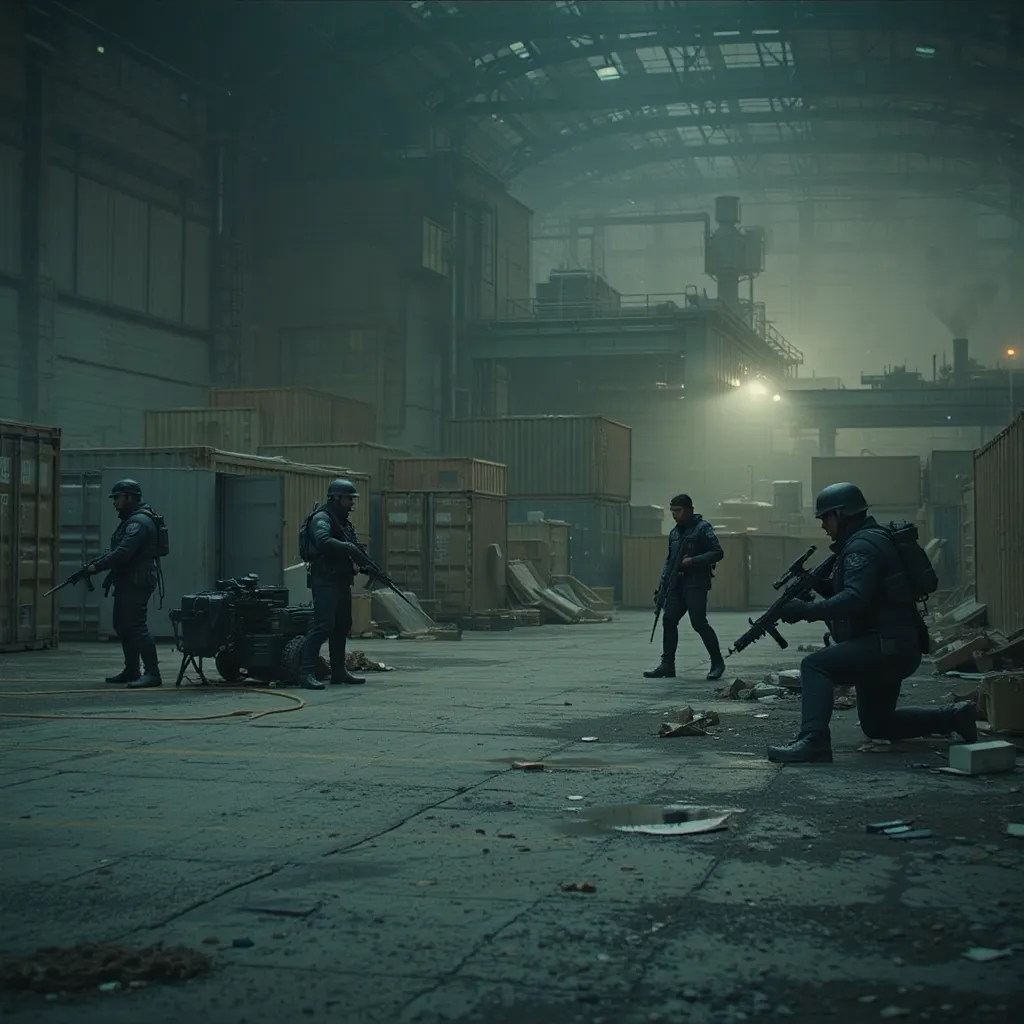
The air hangs heavy with smoke and the distant hum of machinery as you move silently through the shadows of the abandoned warehouse complex. The convoy, a tightly guarded line of purpose-built trucks, is slated to pass through this narrow alleyway, lined with rusted containers and flickering flickering lights. You’ve decided to set up an ambush, risking exposure for the advantage of a swift, decisive hijack. Your team has discreetly placed makeshift barricades and prepared incendiary devices along the route, blending into the gritty environment of this forsaken industrial district. The anticipation is thick. Time is of the essence—if your plan succeeds, you’ll seize control before rival gangs or police can intervene.

Suddenly, distant sirens wail in the background, a reminder that the city’s law enforcement might already be on alert, or perhaps rival factions are closing in. Every second counts. You double-check your gear: weapons, communication devices, and explosives. Your heart races with a mixture of excitement and apprehension. The moment is near—your chosen route is clear, check your equipment again or reposition for better cover.

Suddenly, a gust of wind blows through the alley—perhaps a sign of bad luck. An unexpected flash of lights from a nearby alley hints at a patrol: police or gang members patrolling the area more frequently now. The success of your ambush hinges on timing, stealth, and quick reflexes. What will you do?


Quiz:
A rival gang member spots your team’s setup but hesitates. What’s the best course of action?

  • A) Signal your team to move closer for a more coordinated attack.
  • B) Use a flare to draw their attention away and buy time.
  • C) Attempt to intimidate them into leaving without engagement.
  • D) Abandon the current plan and retreat to reassess.

Correct answer: B) Use a flare to draw their attention away and buy time.


Fortune Event:
As you contemplate your next move, a sudden crackling noise signals a brief failure in your communication device, complicating your coordination. This diminishes your ability to execute precise commands, increasing the risk factor of your plan—but with quick thinking, you might still pull it off.


Visual Description for the Generated Image:
A gritty, hyper-realistic scene of a clandestine team in a dimly lit industrial yard. The team members, dressed in dark tactical gear, are crouched behind rusted containers, surrounded by scattered debris. An ominous convoy of trucks approaches, headlights piercing the gloom. The background features marginally illuminated factory structures, with smoke plumes rising into a cloudy sky, evoking a tense, action-packed moment.

Audio Prompt:
Create a tense, cinematic sound effect of distant engines revving up, muffled radio chatter, and faint sirens in the background, heightening the suspense of a covert operation.


Summary of last turn:
You chose to set up an ambush in the industrial district, preparing makeshift barricades and explosives. A police patrol or rival gang member seems to be nearby, increasing the tension. The plan involves stealth and timing, with a real risk of detection. Your options include signalling early, disabling surveillance, observing the convoy, or creating diversions. A quiz about enemy observation suggests using a flare for distraction, while a sudden communication failure adds an element of unpredictability.


What will be your next move?

Create a distraction elsewhere, drawing attention away from your ambush point, in hopes of a cleaner attack.

Steel Shadows in the Industrial Maw

The thick haze of dawn lingers in the industrial district, where the skeletal remains of abandoned warehouses cast long, threatening shadows. You and your team are hidden behind a rusted shipping container, waiting patiently while the convoy rumbles into position. The atmosphere is tense—every sound exaggerated in the crisp morning air, the muffled hum of machinery and distant sirens punctuating the silence. Your plan: create a distraction elsewhere to divert the attention of the guards, ensuring a cleaner hijack from the rear flank.

Suddenly, a fleeting decision presents itself—sending a signal or stepping up an external chaos that pulls police and gang attention away from your ambush point. Your intuition says that a well-executed distraction could dramatically increase your chances, but it also carries risks: the distraction might spiral out of control, alerting the convoy or bringing unwanted police crackdowns that could spell disaster.

As you scan the surroundings, you notice a nearby refuse depot containing old propane tanks, some abandoned scrap vehicles, and a distant fire at a junkyard. This is your toolkit for chaos. Your options now:

  • Ignite the scrap vehicles to create a fiery scene, drawing firefighting and police away.
  • Use a loudspeaker or flashbang from the nearby alley to attract attention.
  • Set off an explosion at the refuse depot with the propane tanks, risking unanticipated chaos.
  • Send a quick but risky message to a rival gang member to cause a scene in a different district.
  • Wait and observe, risking missing the optimal moment while hoping your existing plan is sufficient.

What will you do?


Summary of last turn:
You planned to set up an ambush along a convoy route and decided to create a distraction to draw police and gang attention away, increasing your chances of a successful hijack.
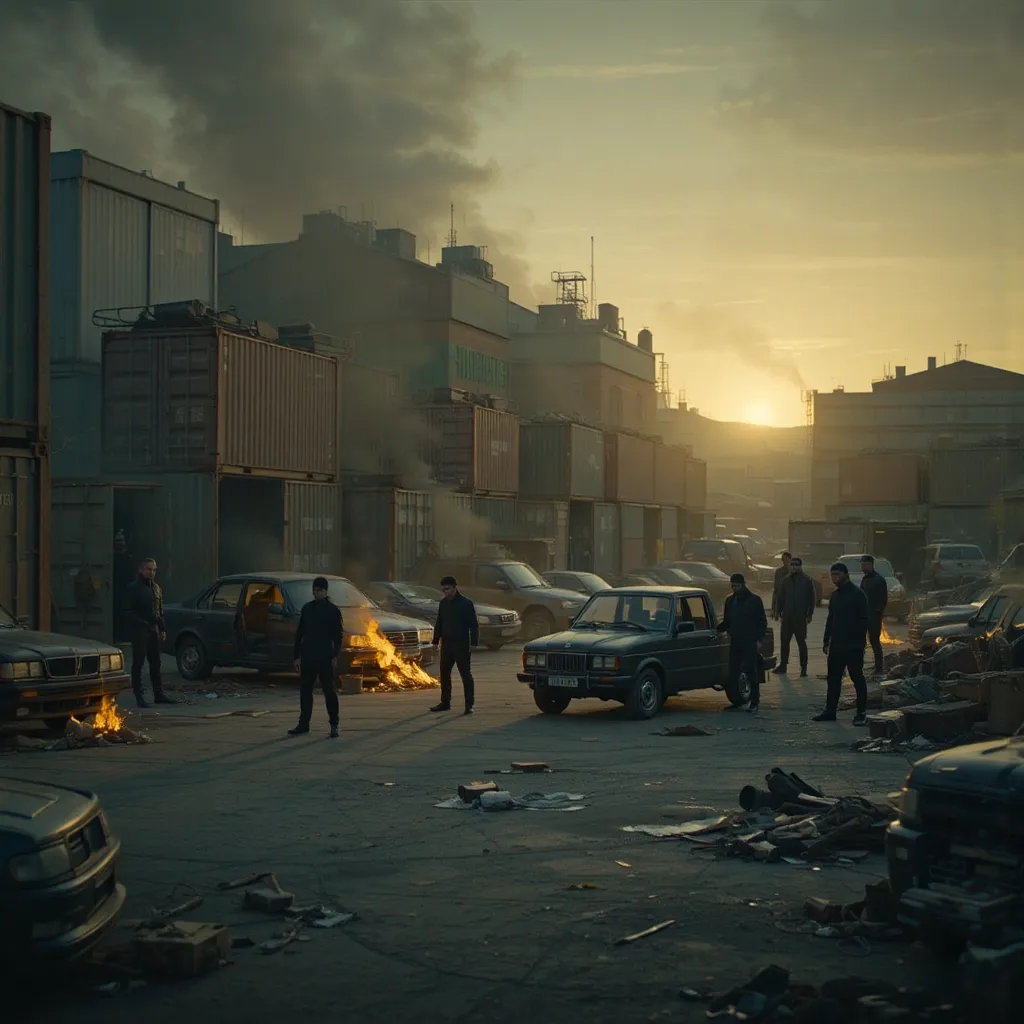

Ignite the scrap vehicles to create chaos.

Inferno of Chaos in the Industrial Yard

As dawn breaks over the industrial district, thick plumes of smoke billow into the sky, wreathed in shades of black and orange. The abandoned shipping containers and rusted machinery cast long, eerie shadows across the yard, now alight with the brutal glow of flames. Molotovs crackle and ignite the scrap vehicles, turning them into fiery beacons that draw the attention of any nearby law enforcement patrols and rival gangs alike. The chaos creates the perfect distraction; sirens wail in the distance, and the air is thick with the acrid smell of burning metal.

You stand back as the conflagration unfolds, confident that your ambush will catch the convoy unawares amid the bedlam. Powerful flames flicker, hot sparks flying into the sky, and the distant rumble of approaching engines signals the convoy’s imminent arrival—an essential moment in your plan to hijack the cargo without interference.

Suddenly, a police cruiser and a few gang members rush past the yard, drawn by the flames and chaos. This diversion should give you a crucial edge, but there’s always a risk that the fire might attract too much attention or cause unforeseen complications. As the flames roar higher and the cartel’s convoy begins to appear on the horizon, you make your final preparations.

The first option is to:

  • Signal your team to move in now, taking advantage of the chaos and aiming for a quick hijack before any backup arrives.
  • Delay the attack slightly, ensuring the police are further distracted and the gang members are fully engaged with the firefight, increasing your chances for a safer takeover.
  • Try to sabotage the convoy’s route further by planting a makeshift obstacle or obstacle to slow their progress once they arrive.

What’s your move?
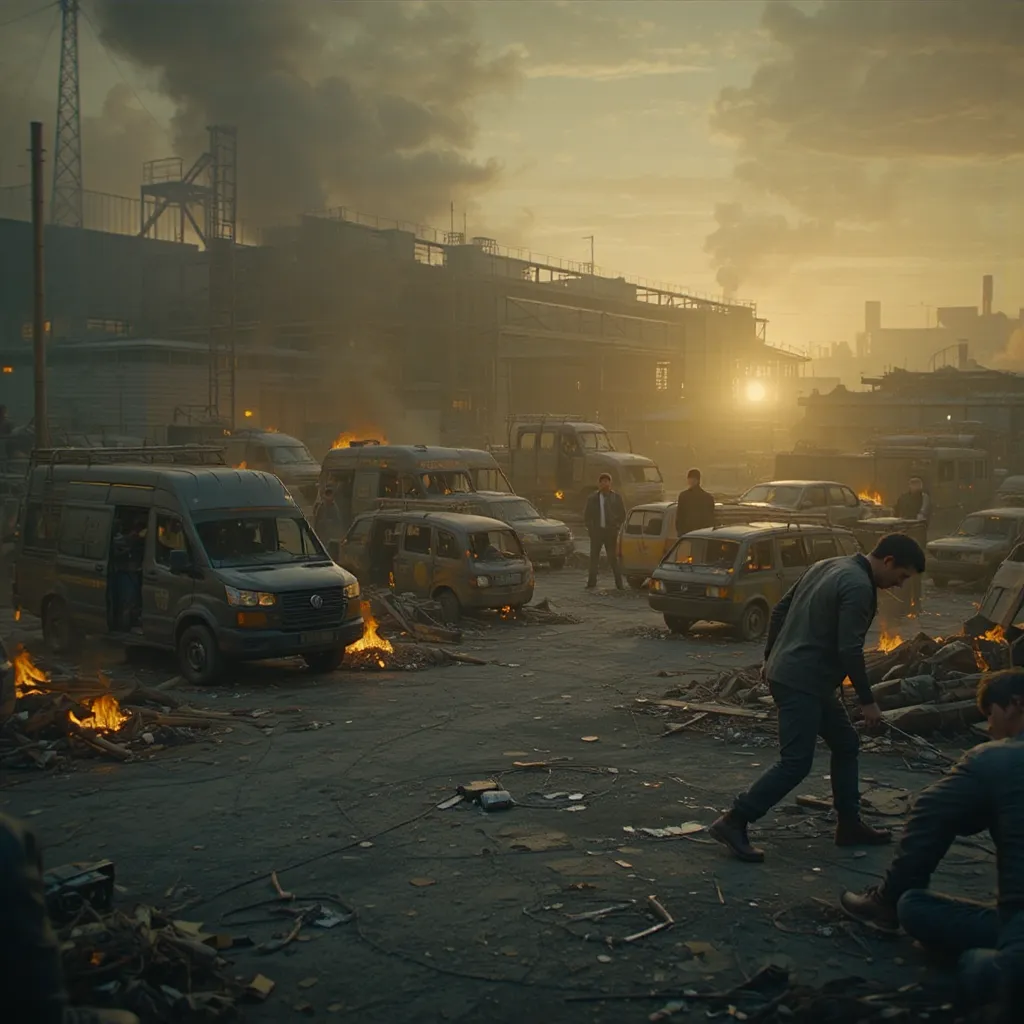

Signal your team to move in immediately, taking advantage of the chaos.

The chaos is finally at your command. Flames billow greedily across the scrap yard, casting flickering shadows as the police and rival gang members scramble amidst the inferno. Car alarms blare, sirens wail in the distance, and the blurred figures of your team lurk in the shadows, ready to strike. The explosion of Molotovs was a calculated move to draw attention away from your ambush point, and now it’s time to seize the moment while everyone is distracted and disoriented. Your heart pounds as you signal your crew — the plan is set, the chaos is in full swing. This is your moment to act decisively and turn the tide of this dangerous game.

But hesitation could be deadly. Moving in too early could alert opponents prematurely, while waiting might allow police reinforcements or rivals to regroup. You need to make a critical decision—act now or hold back slightly to ensure maximum impact?

Your choices will shape the next furious phase of your conflict, pushing toward your ultimate goal while keeping you alive in this high-stakes urban warfare.
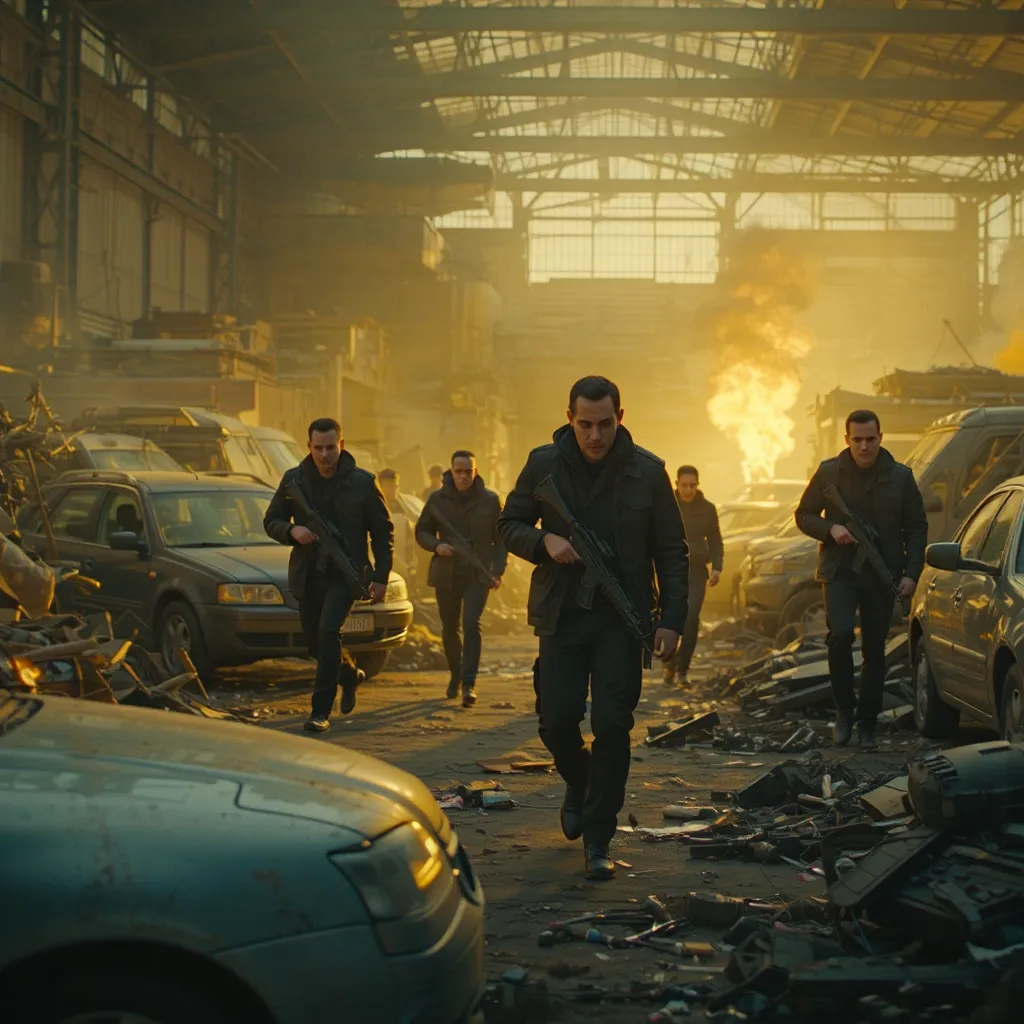

Signal your team to move in immediately, taking advantage of the chaos.

Chaos Unleashed: The Final Strike

As the flames from Molotovs roar into the sky, illuminating the dawn with flickering orange light, your team moves swiftly and purposefully through the chaos. The smoke cloaks their movements, and the distant sirens wail but are drowned out by the blazing inferno. Every second counts—your command now is crucial. You raise your hand, signalling your team to strike while the police and rivals are distracted, their attention fully absorbed by the burning wreckage.

The team disperses into the smoke—some slipping behind overturned cars, others darting through narrow alleyways toward the primary ambush point. The tension inside you tightens; you know this is the culmination of all your plans, and failure isn’t an option. The chaos grants you the perfect cover, but it also amplifies risks. Your team is exposed, and every noise could alert the police or rival factions to your presence.

Suddenly, a loud explosion shakes the ground nearby — some of your own Molotovs ignite too close, and a secondary fire erupts prematurely, causing an unintended burst of chaos. This minor setback could throw off the timing, but your organisation’s focus remains sharp.

From your vantage point, you see figures moving in the shadows—your allies, all converging toward the target zone. The tension peaks as you prepare for the imminent confrontation, knowing that with every passing second, the chance for your big move grows closer.


Choose your next action:


Summary of last turn:
You initiated chaos by setting Molotovs, creating a perfect distraction, after which you signalled your team to strike while police and rivals were preoccupied.


Would you like a visual scene to set the tone?
Sound effect:

Call for a diversionary flare to mislead police and rivals before the attack.

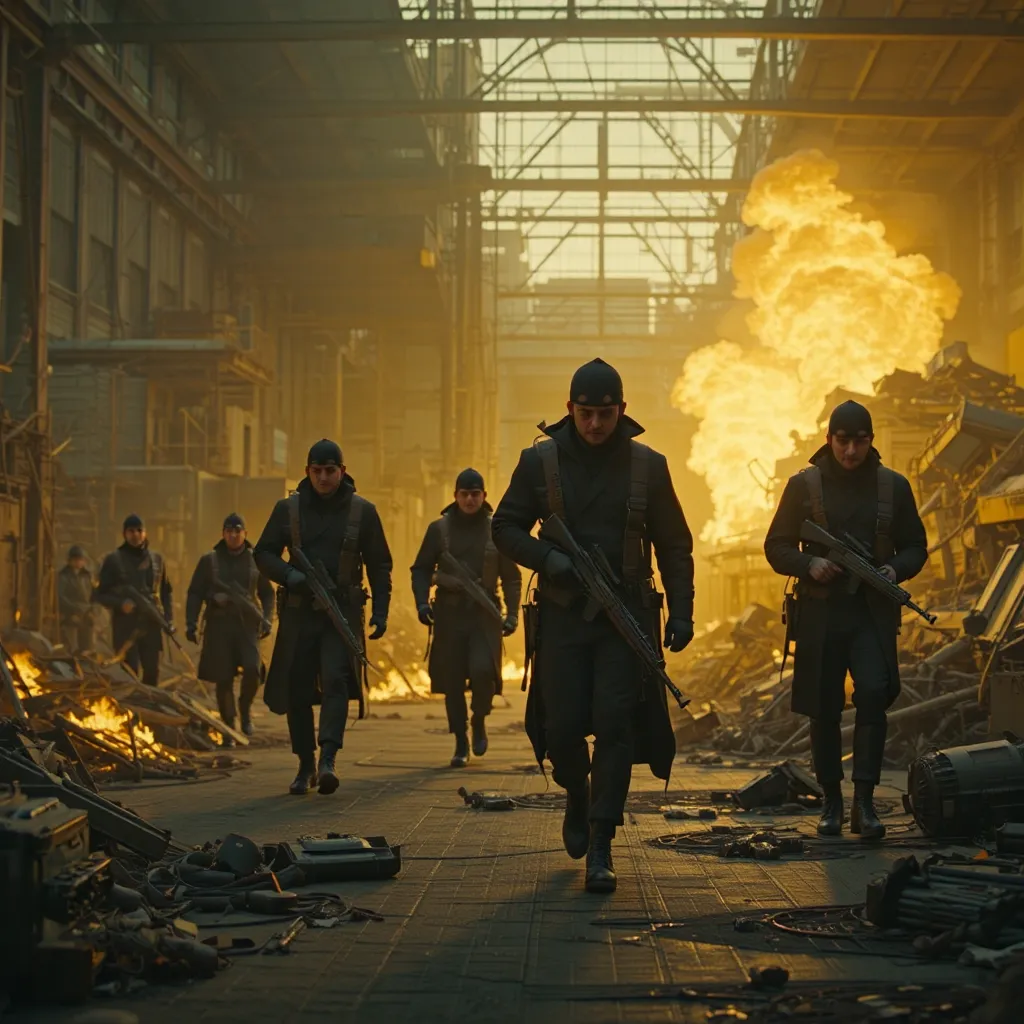
Dawn breaks over the city, an ominous grey hue casting long shadows across the deserted warehouse district. Flames from Molotovs still flicker in the distance, casting a fiery glow that dances across the broken concrete and rusting steel. Your team, cloaked in dark clothing and face masks, manoeuvres through the chaos you’ve ignited, using the massive fires as cover. The chaos has successfully diverted police and rival factions, drawn their attention away from your precise ambush point.

As tension thickens, you quickly assess your next move. The plan hinges on creating an additional diversion—one that will draw maximum attention, buying your team precious time to strike decisively. You reach out, signalling your teammates to prepare for the next critical step—calling in a diversionary flare to ensure the police and rivals remain distracted.

Your voice crackles through the radio, crisp but urgent: “We need a flare now—something to keep them chasing shadows.”

The options are clear:

  • Call for a high-altitude firework flare to create a sudden, spectacular distraction.
  • Send a runner to set off a nearby abandoned gas station to cause an explosion.
  • Use a flare gun to direct the police’s attention toward a specific location, leading them away from your team’s position.
  • Opt for a covert signal—plant a false trail to mislead the police into thinking your team is heading elsewhere.

What is your choice?


Please select your next move carefully—each decision dramatically influences the progress of your operation and the danger level you face.

Send a runner to set off the abandoned gas station.

A Dangerous Gambit in the Midnight Skies

The darkness of the city thickens, punctuated only by the flickering flames from the Molotovs you’ve set ablaze earlier. The chaos has successfully diverted police units and rival factions—yet, you know this momentum is fragile. Your team has only moments before the police recalibrate their response, and the window to strike at your enemy’s main target narrows dangerously.

Deciding that a strategic explosion will push the chaos even further, you signal your trusted runner—a lean figure dressed in dark clothes and equipped with a lightweight mask—to approach the abandoned gas station a block away. Its eerie, dilapidated structure looms in the shadows, a perfect location to set off an explosive and intensify the diversion.

The runner moves swiftly, eyes scanning for security cameras, patrols, and potential obstacles. The chances are perilous—the police could stumble upon your operation, cutting your plan short. Yet, the temper of the night and the silence in your ears bolster your resolve.

Suddenly, static crackles on the radio, a tense pause before you hear your teammate whisper, “Ready to detonate. Just give the word.”

In this critical moment, you must decide your next move:


What is your decision?

Abort the plan—an explosion at this moment risks overcommitting and exposing us.

In the shadows of the decaying gas station, your team’s nerves tighten as you consider the dangerous calculus ahead. The roar of distant sirens and the flickering amber glow of the Molotov fires dance in your mind. The tactic of plunging the enemy into chaos with an explosive seemed sound, but your gut tells you that rushing now risks revealing your position prematurely—destroying the element of surprise you’ve fought so hard to maintain.

The team’s silent agreement is palpable. You raise a hand, signalling that the plan to detonate must be halted. Immediate reassessment is crucial. Perhaps the chaos you’ve already wrought is enough to cover your true assault, or maybe the police will focus on the fires before redirecting their attention.

A sudden, cold breeze sweeps through, flickering shadows across the cracked asphalt—a sign that your window of opportunity is closing. You know rivals nearby are sensing the shift and could capitalise on your hesitation. This decision might buy you precious time but also risks your entire operation falling apart if you wait too long.

As you breathe steadily, contemplating your next move, a faint radio crackle whispers over the comms: “We need to think fast. If we don’t move now, they’ll recover and trap us in the crossfire.” Tension thickens; your plan’s future hinges on your next decision.

Faced with this critical moment, what will you choose to do?

What is your decision?

Attempt a distraction elsewhere, diverting police away from your main target.

A Calculated Distraction—Diverting Eyes and Ears

The chaos surrounding the Molotov fires is still wild—flames licking the sky, police sirens blaring, and crowds scrambling to escape the inferno. Amidst this pandemonium, your instinct sharpens; you know that the authorities’ focus will be kept busy by the fires and commotion, giving you a fleeting window to shift the battle elsewhere.

Your plan is simple but risky: orchestrate a secondary distraction apart from your main attack point. You scan the surroundings, selecting a location where a timely distraction could pull police and rival attention away—perhaps a nearby abandoned warehouse with a reputation for stashing illegal goods, or a quiet alley frequently used for hush-hush exchanges.

You swiftly arrange for one of your team to create a loud, attention-grabbing disturbance there—faking an armed robbery, setting off a small but noticeable explosion, or signalling a dummy confrontation. The objective: make authorities believe the threat is originating from this secondary site, not where your true ambush awaits.

Timing is critical; the distraction must occur just as your main strike prepares to launch. Every second counts, and a misplaced move could blow your cover or escalate the situation uncontrollably. You give the nod to your teammate, who disappears into the shadows, carrying out your diversion.

Suddenly, a wild gust blows smoke from the fires into the air, complicating visibility and adding to the confusion. The police rally towards the fake disturbance — sirens turning in that direction, officers rushing to respond to what seems like a fresh threat.

However, luck or misfortune can strike here. A small misfire could ignite a secondary blaze that alerts the authorities early, or the fake diversion might be spotted for its falsehood, forcing your team to improvise under pressure.

Now, your main objective remains: capitalise on police attention elsewhere, strike your true target with precision, and escape before the net tightens. When the distraction is fully underway, your team will know it’s time to move.

You have a limited window—will you commit fully to an elaborate secondary distraction or keep your focus on the primary plan?


Last turn summary: You decided to halt the Molotov plan and instead considered signalling your team to strike while police and rivals are distracted, weighing the risk and reward of immediate action against patience.


Visual Style & Characters:
Describe a tense street scene with contrasting elements: blazing, chaotic fires illuminating a dark urban street; flashlights and police sirens reflecting off wet pavement; gritty characters dressed for a night raid—leather jackets, masks, and tactical gear. The composition captures the tension, urgency, and dark underworld atmosphere consistent with the game’s gritty, open-world tone.
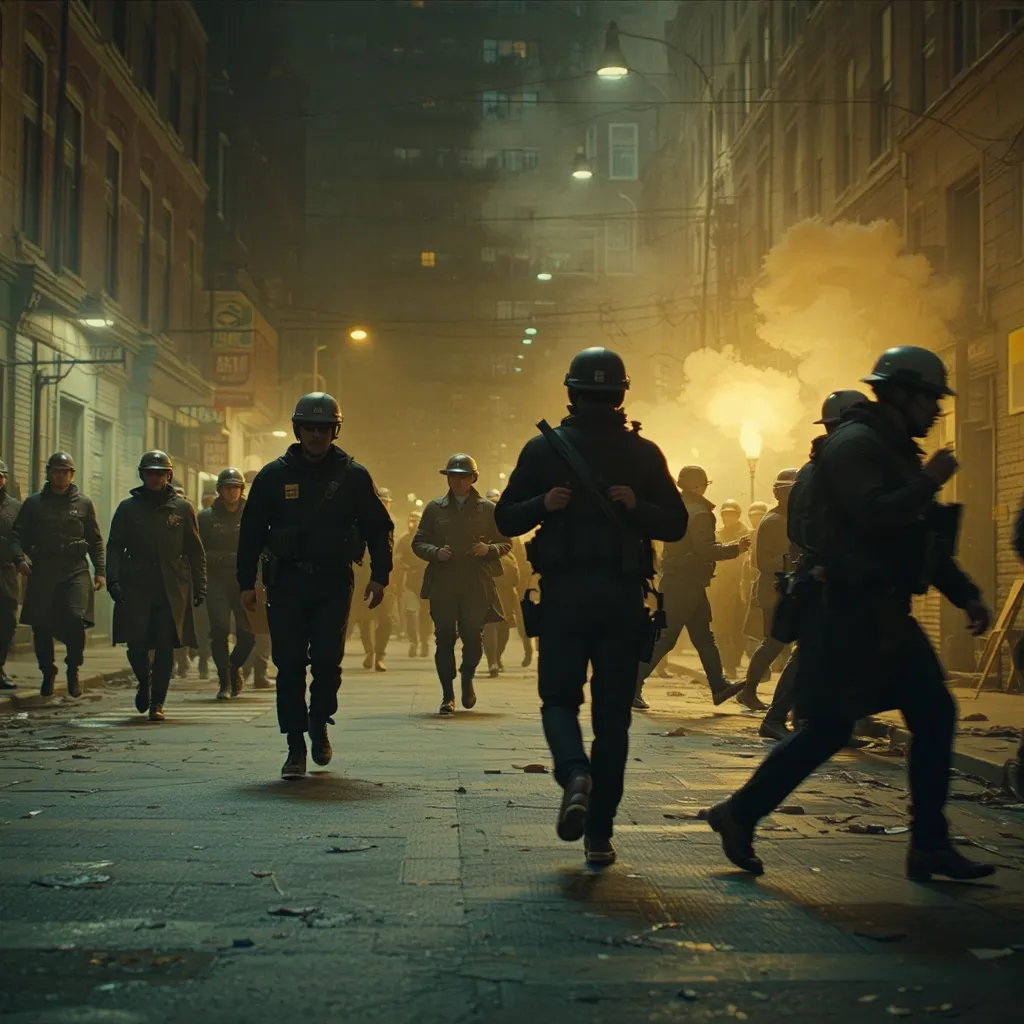
Send a minimal distraction, risking limited impact but preserving your cover.

A tense hush settles over the dimly lit urban sprawl as you carefully orchestrate a minimal but strategic distraction. The chaos you previously ignited with Molotovs is still rippling through the streets—firelight flickers against crumbling brick walls, police sirens wail in the distance, and rival factions are momentarily distracted by the inferno’s glow. Your objective now is to maintain your cover while creating just enough noise and chaos to pull police attention away from your planned ambush point.

In this critical moment, you decide to send a subtle signal—perhaps an illicit device or a carefully crafted false disturbance—aimed at diverting police patrols without attracting undue suspicion. The goal is to keep the heat off your team’s actual target, ensuring the upcoming assault proceeds with maximum advantage. This approach reduces the risk of a total crackdown that could jeopardise your entire operation but also carries the chance that your distraction might be too feeble to draw significant police effort.

The streets are eerily quiet beneath the distant wail of sirens and faint crackling from the fires. You have to choose your next move carefully, balancing daring and caution while ensuring your main objective remains secure.

What will you do next?

Retreat silently, trusting the distraction has just enough impact to cover your team’s advance.

Shadows of Deception

You command your team to retreat silently into the urban labyrinth, trusting that the chaos ignited by the Molotovs, along with the subtle secondary disturbance, will hold and rival factions occupied long enough for your ambush to unfold. The dim glow of the fires flickers against the crumbling facades as you melt into the shadows, moving swiftly and silently past debris, abandoned vehicles, and flickering streetlights. Every step is calculated, knowing that the slightest misstep could reveal your position or undo months of meticulous planning.

Your heart beats steady, mindful of the possible outcomes—success hinges on your team’s ability to remain undetected. The distraction at the other site creates enough confusion for police to divert patrols, but the lingering threat remains: an aggressive pursuit could still materialise if the noise level escalates unexpectedly or if rival factions decide to aggressively hunt anyone they perceive as a target.

Suddenly, a distant police radio crackles, hinting at increased activity in the area, but it’s only a faint ripple in the wider chaos. You breathe a cautious sigh of relief, keeping your head down as you make your way towards the undercover rendezvous point, where your team lies in wait, ready to strike at the opportune moment.

Your decision to retreat silently appears to be paying off—so far. Yet, the night remains unpredictable, and the true threat lies just beyond the shadows.

What is your next move?


The fortune of the night hangs in the balance, with success still uncertain.
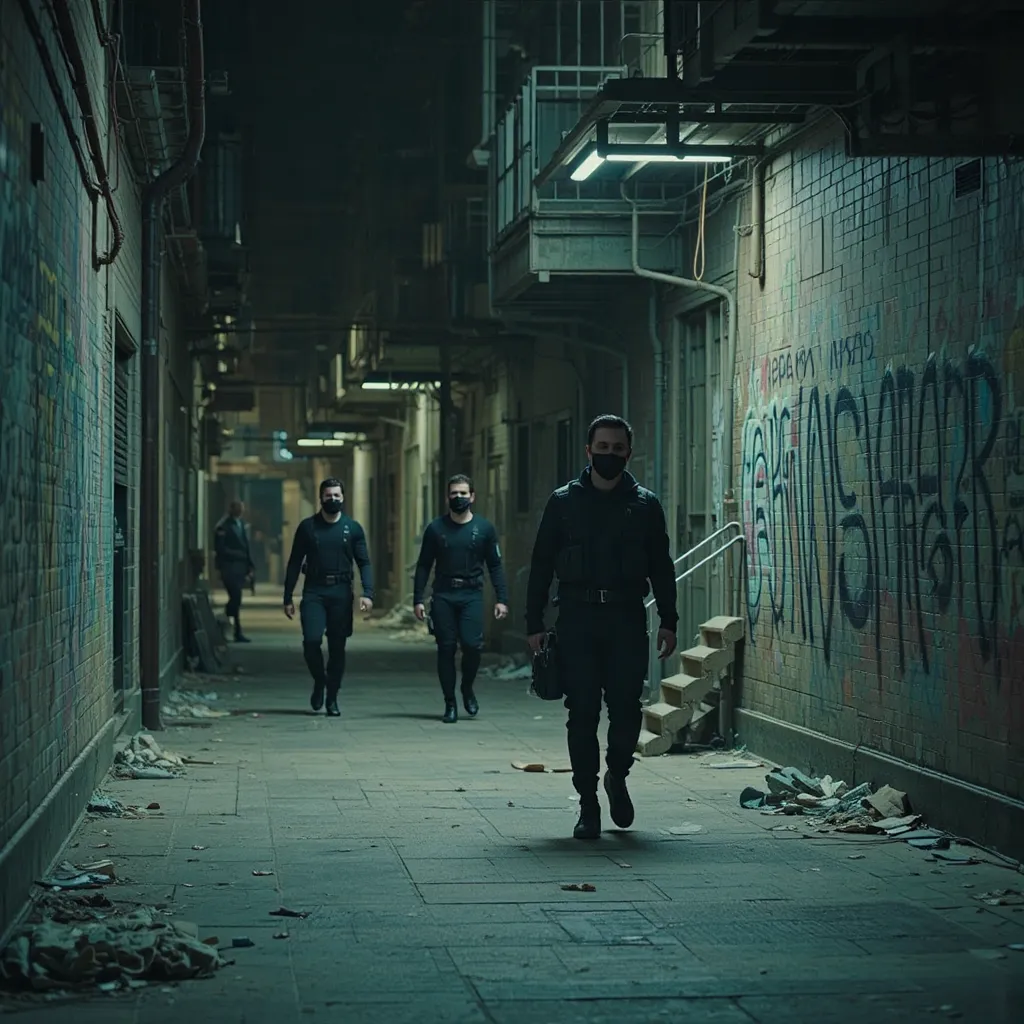
Signal your team to prepare for the final assault, maintaining silent observation.

Silent Vigil in the Shadows

The chaos you orchestrated has reached its peak—a cacophony of distant sirens, shattered glass, and burning Molotovs illuminating the night sky like hellish fireworks. Your team, clad in dark tactical gear, remains hidden behind shadowed alleyways, carefully monitoring the tumult. The diversion has successfully drawn police forces and rival gangs away from the main ambush point, allowing you to stage the decisive strike.

The air is thick with anticipation; every second counts. You’re poised to initiate the final assault, but the element of surprise still hangs in the balance. Your team’s silence, careful positioning, and your sharp tactical awareness will determine whether victory is swift or catastrophic. As you watch through your binoculars, you see the police vehicles at a distance, their flashing lights flickering like faint beacons, while the rivals are embroiled in secondary chaos, completely distracted.

This moment of calm amidst the storm is critical. You signal silently with a hand gesture, a universal sign to prepare for the final move. Your team responds with nods, eyes focused, grips tightening on their weapons. You hold your breath — the success of your plan hinges on this quiet reinforcement. Will you lead the raid now or wait for an even better opening? Every decision could sway the outcome of this high-stakes confrontation.

What will you do next?
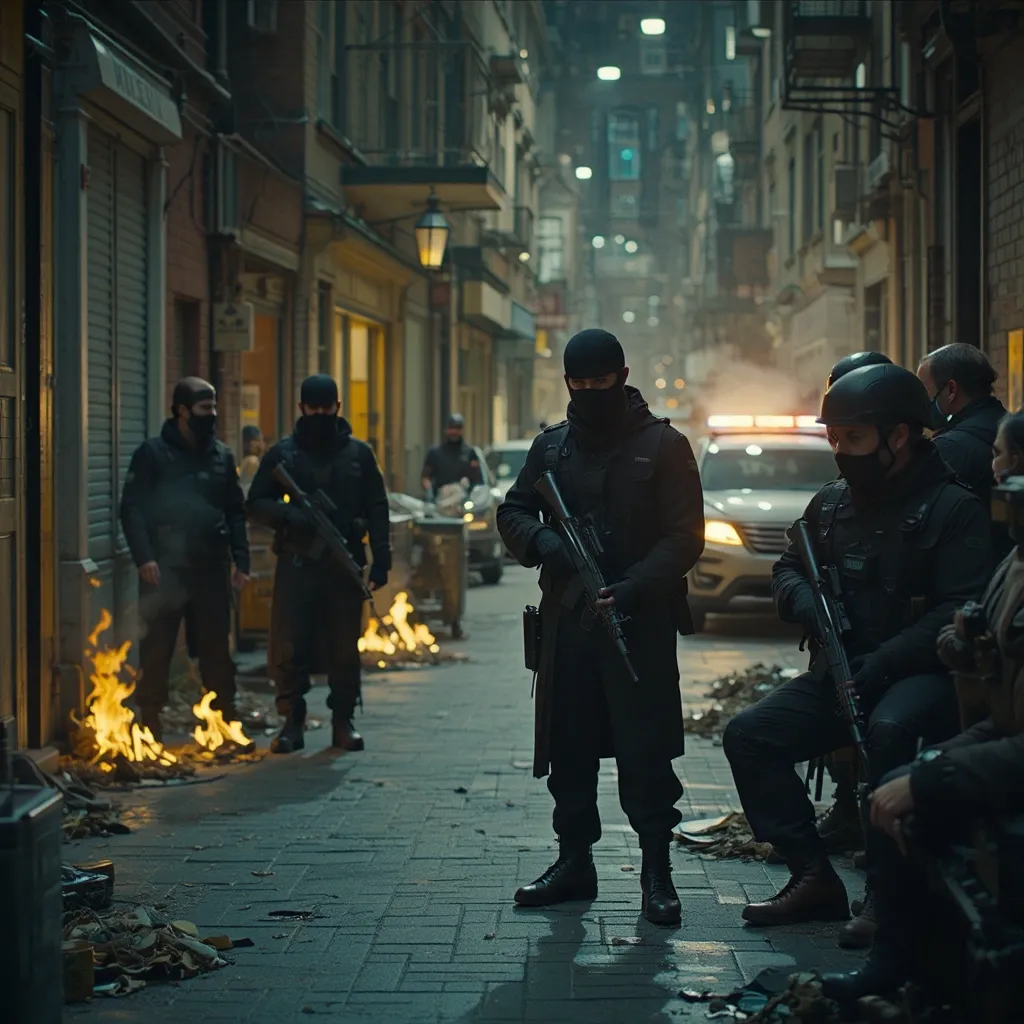
make run by using sports cars from police and hide from them

Whispers of the Night: The Great Escape

The darkened city street lies silent for a moment, tension thick in the air. Your team, nestled behind the crumbling facade of a graffiti-covered warehouse, knows that the chaos you’ve unleashed with Molotovs has done its job—police units and rivals are diverted elsewhere, their focus fixed on the destruction. Now, the critical moment has arrived. You signal sharply, and your team begins slipping into their prepared sports cars—sleek, roaring engines ready to cut through the urban maze. The plan is bold: a high-octane escape, weaving through narrow alleys, traffic grids, and busy intersections, all while evading pursuit.

The police have yet to rally, but their presence grows each second—sirens echo in the distance, and patrol lights flicker ominously on the horizon, closing in. The city feels alive with danger, every turn fraught with risk but holding the promise of victory. Your goal is clear: make it out without a trace, leaving police confusion in your wake, and setting the stage for the final strike.

As your team accelerates into the night, you notice the police cars — their models gleaming with flashing lights — beginning to form a blockade. Your options: Press forward in a daring stunt, darting through a maze of backstreets; outrace the police via a dangerous high-speed chicane; or attempt to shake pursuit by leading them into a trap. Each choice carries risks, demanding both speed and tactical finesse.


Scene Image Prompt:
A vivid, gritty depiction of a clandestine city street at midnight, illuminated by neon signs and flashing police lights. Four sportscar models—sleek, powerful, with shining Chrome and tinted windows—speed through tight alleyways flanked by rundown brick warehouses, smoke rising from scattered Molotovs in the background. The scene captures the thrill of escape, shadows flickering across tense faces inside the cars, and the urban chaos closing behind them.


Sound effect:
A rapid, adrenaline-pumping engine roar layered with siren wails and shifting city sounds, conveying urgency and danger.


Summary of last turn:
You orchestrated a daring escape plan using high-speed sports cars, intending to outrun police pursuit and vanish into the city’s maze, to set up the final assault.


Your challenge now is to decide how to proceed with the chase, balancing risk and reward for maximum effect.

Choices:

Which option will you choose to outrun the police and secure your team’s escape?

make it

The Hustler: You have a knack …

start

OkayOkay, let’, let’s kick off your streetwear empire game!

**Setting: The Rise of Streets kick off your streetwear empire game!

**Setting: The Rise of Streetwear (1980s – 1990s, New York City)wear (1980s – 1990s, New York City)

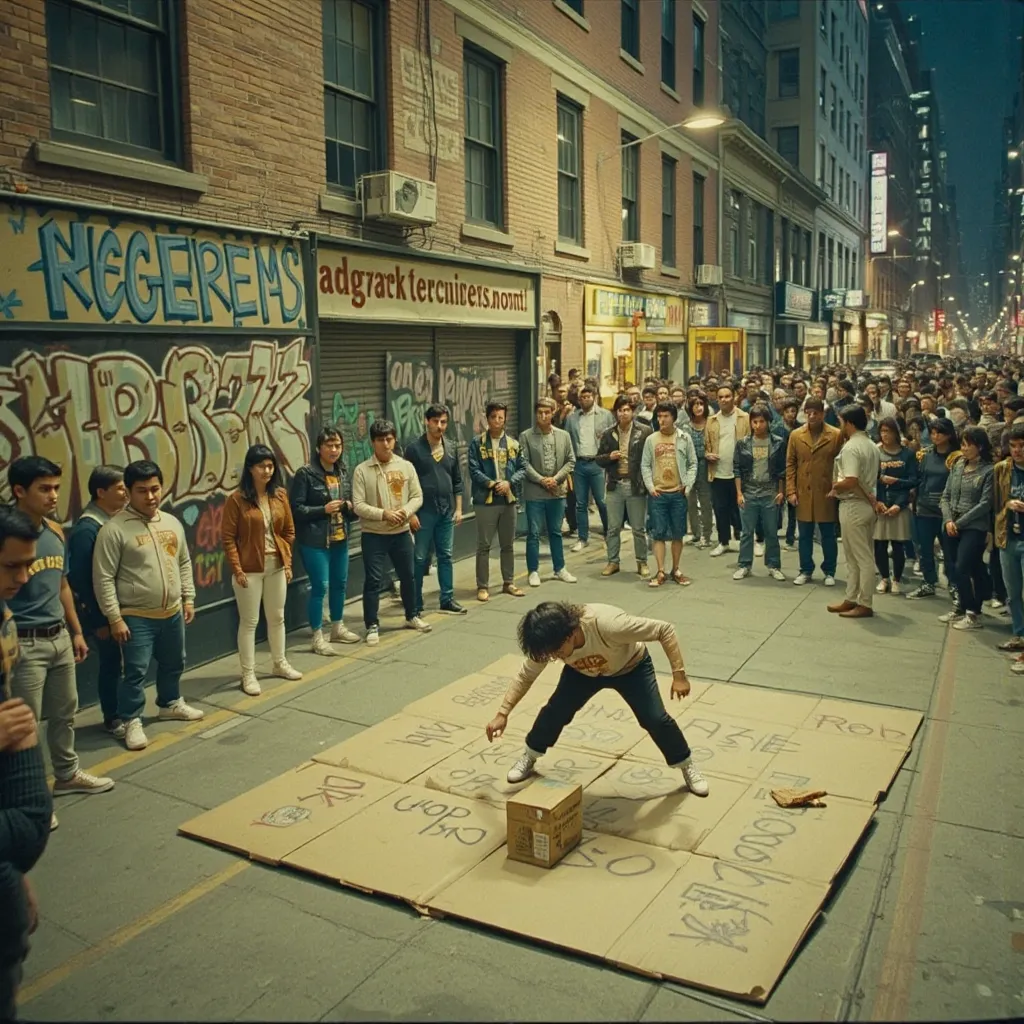
Our story begins in the vibrant crucible of 1980s and 90s New York City. Hip-hop culture is exploding, graffiti art

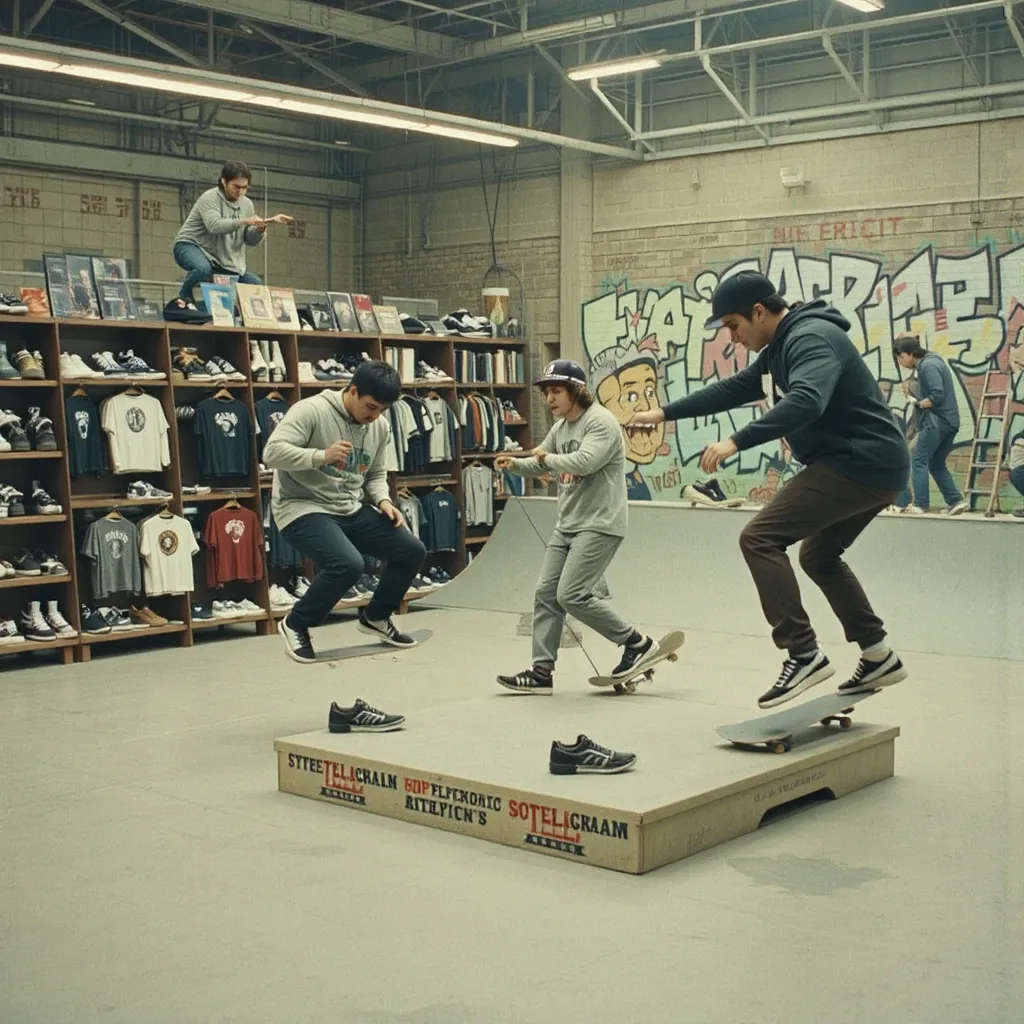
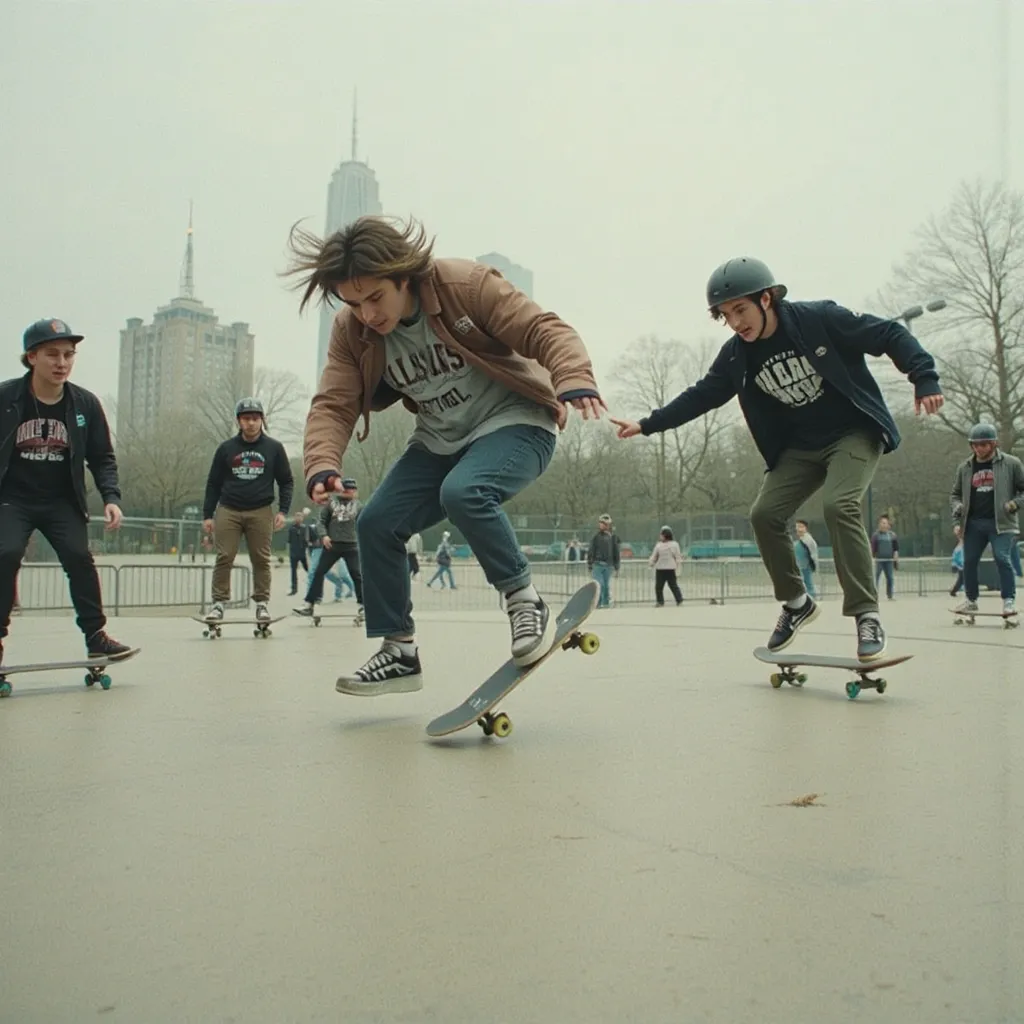
Our story begins in the vibrant crucible of 1980s and 90s New York City. Hip-hop culture is exploding, graffiti art is claiming its space, and skateboarding is carving its own rebellious path. This era saw the birth of streetwear, a fusion of these subcultures with high fashion. Think is claiming its space, and skateboarding is carving its own rebellious path. This era saw the birth of streetwear, a fusion of these subcultures with high fashion. Think boomboxes blasting on street corners, graffiti-covered subway cars, and the raw energy of a city on the cusp of cultural revolution. Early streetwear brands emerged from this environment, often started by artists, DJs, or skaters who wanted to create clothing that reflected boomboxes blasting on street corners, graffiti-covered subway cars, and the raw energy of a city on the cusp of cultural revolution. Early streetwear brands emerged from this environment, often started by artists, DJs, or skaters who wanted to create clothing that reflected their lifestyles. They were driven by a DIY ethos and a desire to express themselves outside the mainstream. Luxury brands started to take notice, leading to collaborations that further blurred the lines between high fashion and street culture.


Now, let’s create your character. Choose wisely, as this choice will influence your starting path in the streetwear world:

Now, let’s create your character. Choose wisely, as this choice will influence your starting path in the streetwear world:

$tools(The Hustler: You have a knack for business and a desire to make money. You are willing to take risks and do whatever it takes to get to the top.)

The Hustler: You have a knack for business and a desire to make money. You are willing to take risks and do whatever it takes to get to the top.

EmpireEmpire Dreams**

The year is 1992. You’re Kai Dreams**

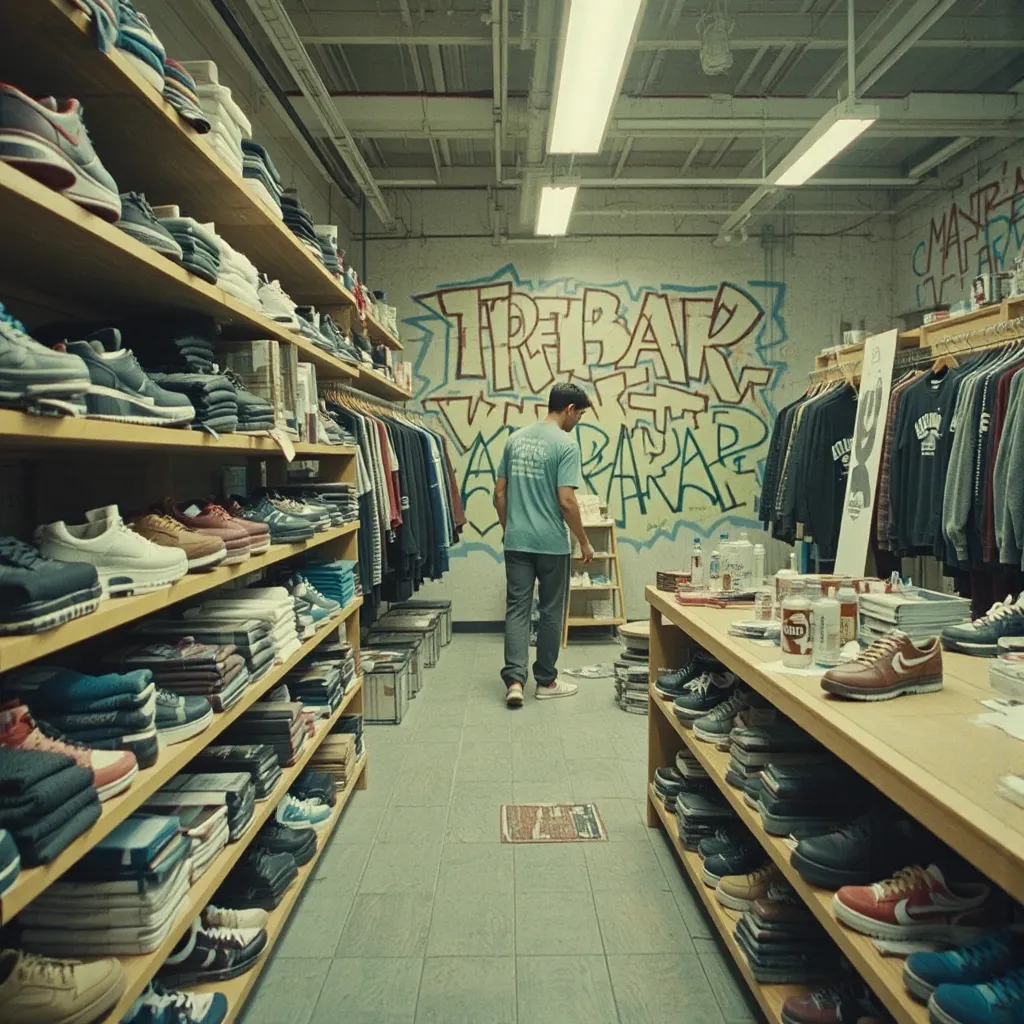
The year is 1992. You’re Kai, “The Hustler,” navigating the vibrant, cutthroat streets of NYC. Armed, “The Hustler,” navigating the vibrant, cutthroat streets of NYC. Armed with street smarts and a burning ambition, you aim to build a streetwear empire from the ground up. Your first move: secure a prime location. A dilapidated with street smarts and a burning ambition, you aim to build a streetwear empire from the ground up. Your first move: secure a prime location. A dilapidated storefront in SoHo catches your eye, but requires serious investment, or a risky deal with a local “businessman” could be another option. A safer option is a less desirable storefront in SoHo catches your eye, but requires serious investment, or a risky deal with a local “businessman” could be another option. A safer option is a less desirable location in the Lower East Side. The clock is ticking; rent is due soon. What’s your play?


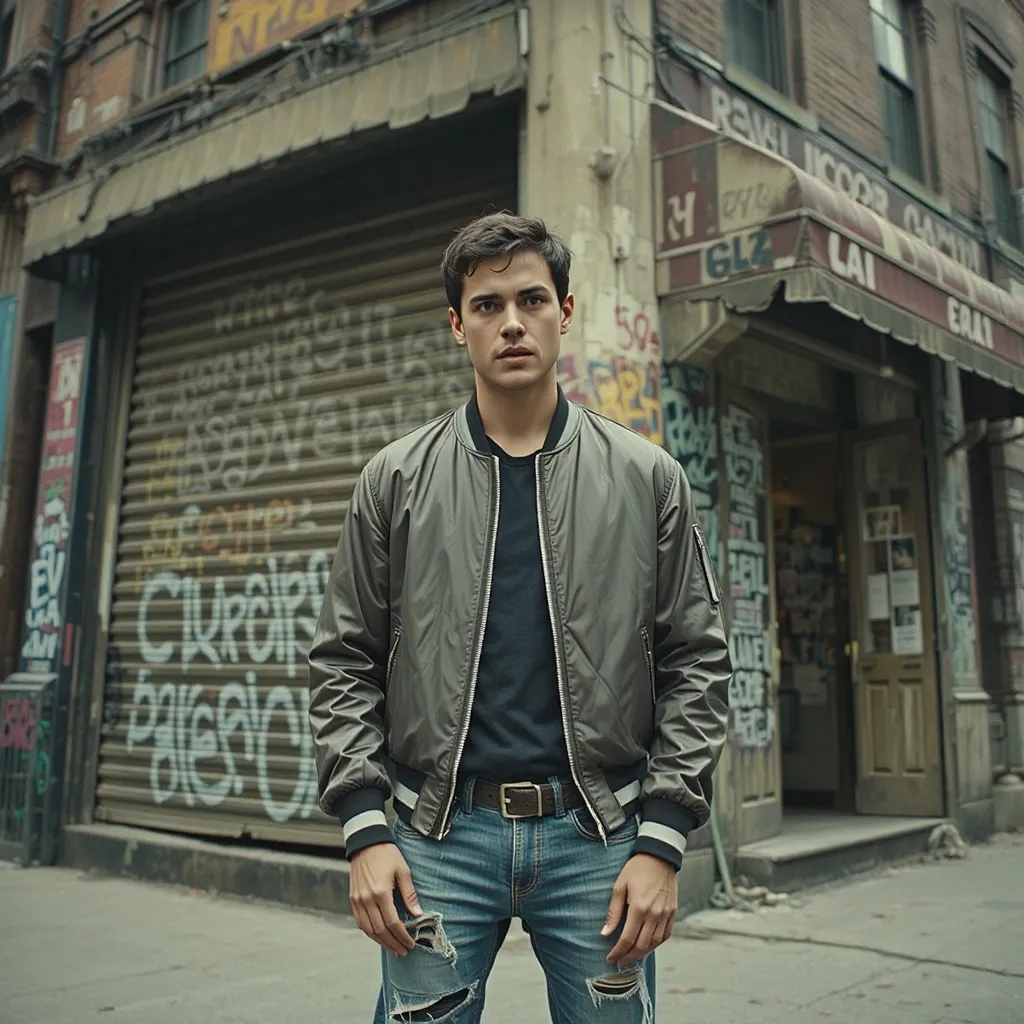
$tools jacket and distressed jeans, stands before a run-down storefront in SoHo. Graffiti covers the walls, reminiscent of the previous street scenes. The style remains gritty and realistic, highlighting the urban decay and Kai’s determined expression.”)

Secure the Lower East Side location.

TheThe LES Calling

Kai, the Hustler, surveys the Lower East Side storefront. Less LES Calling

Kai, the Hustler, surveys the Lower East Side storefront. Less flashy, more grit. The rent’s manageable, the vibe authentic. But is flashy, more grit. The rent’s manageable, the vibe authentic. But is it too safe? Word on the street: a major streetwear influencer is hosting a pop-up nearby. Capitalize, or stay low?

$tools it too safe? Word on the street: a major streetwear influencer is hosting a pop-up nearby. Capitalize, or stay low?

Focus on building a loyal local following.

LESLES Hustle

Kai doubles down on the LES vibe, organizing a block party with local artists Hustle

Kai doubles down on the LES vibe, organizing a block party with local artists and DJs. It’s a gamble: low margins, high effort. But the streets and DJs. It’s a gamble: low margins, high effort. But the streets are buzzing. The influencer’s pop-up draws a crowd, but yours feels like home. A known streetwear photographer notices Kai’s unique designs and the are buzzing. The influencer’s pop-up draws a crowd, but yours feels like home. A known streetwear photographer notices Kai’s unique designs and the crowd. A chance encounter? Or a setup?

Stay cautious, investigate their motives.

BlockBlock Party Buzz

The Lower East Side block party is a smash! Word spreads like Party Buzz

The Lower East Side block party is a smash! Word spreads like wildfire. Your store, “Concrete Dreams,” is the talk of the town. Orders wildfire. Your store, “Concrete Dreams,” is the talk of the town. Orders flood in! But a known fashion house is rumored to be sniffing around. Are they collaborators or competition?

Remain Neutral

FashionFashion House Fortune

The fashion house’s scout approaches, impressed by the block party’s House Fortune

The fashion house’s scout approaches, impressed by the block party’s energy and Kai’s Hustler brand. They propose a collaboration: a limited-edition streetwear energy and Kai’s Hustler brand. They propose a collaboration: a limited-edition streetwear line. This is a major opportunity, but also a potential risk to Kai’s independent brand. Navigate carefully; this deal could make or break you.

$tools line. This is a major opportunity, but also a potential risk to Kai’s independent brand. Navigate carefully; this deal could make or break you.

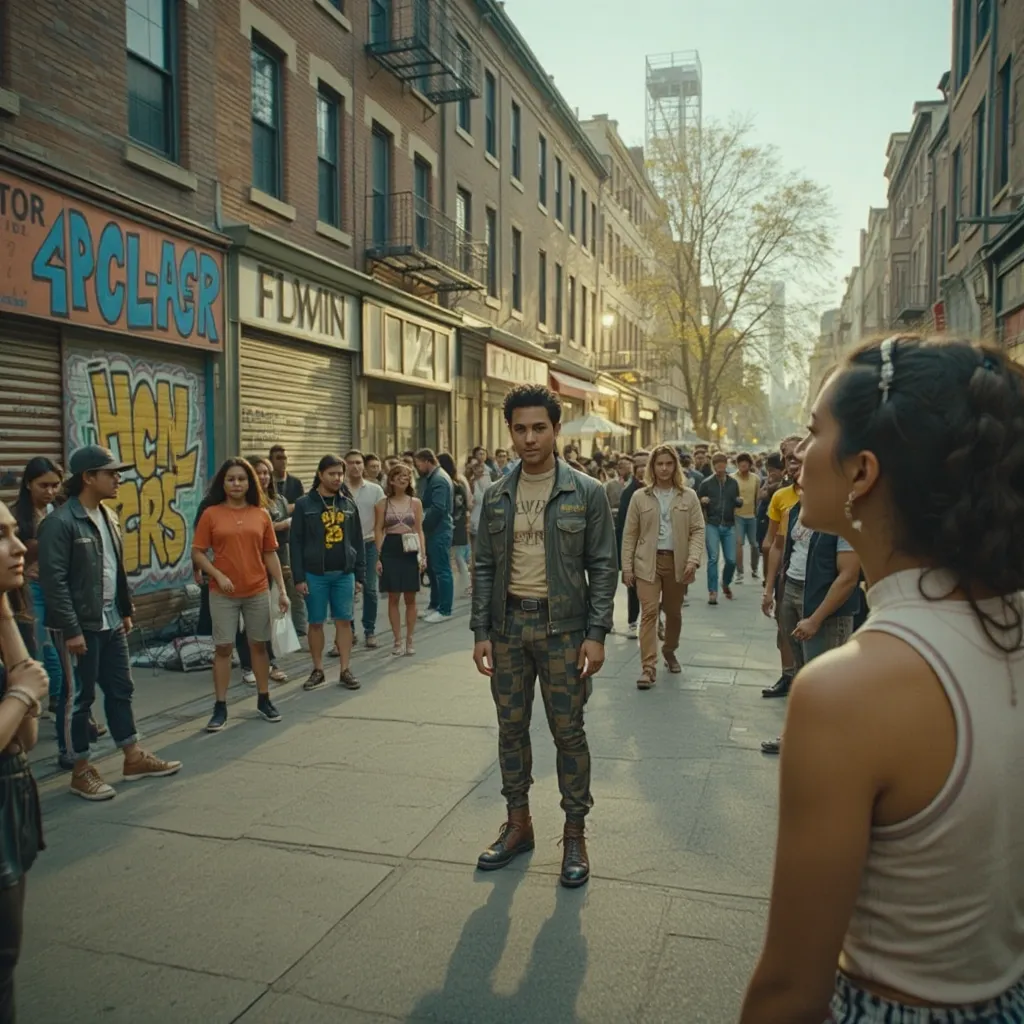
$tools dressed fashion house executive. The block party is winding down in the background, but the energy remains palpable. Maintain gritty, urban photography style, but with a slightly more polished feel to reflect the fashion house influence. Use warm, inviting colors.”)
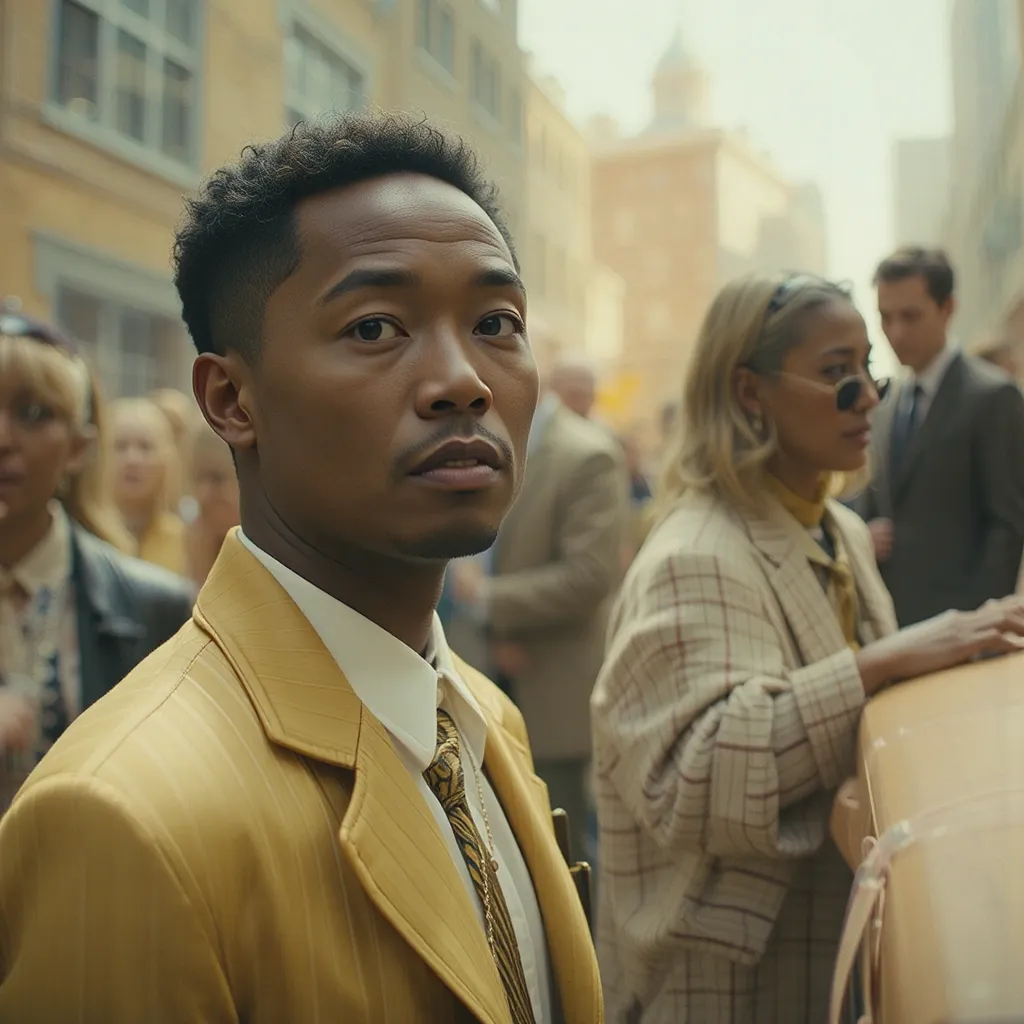
$ the moment of the deal.”)

five night’s at diddy’s

start the first night

Background Description of the Setting

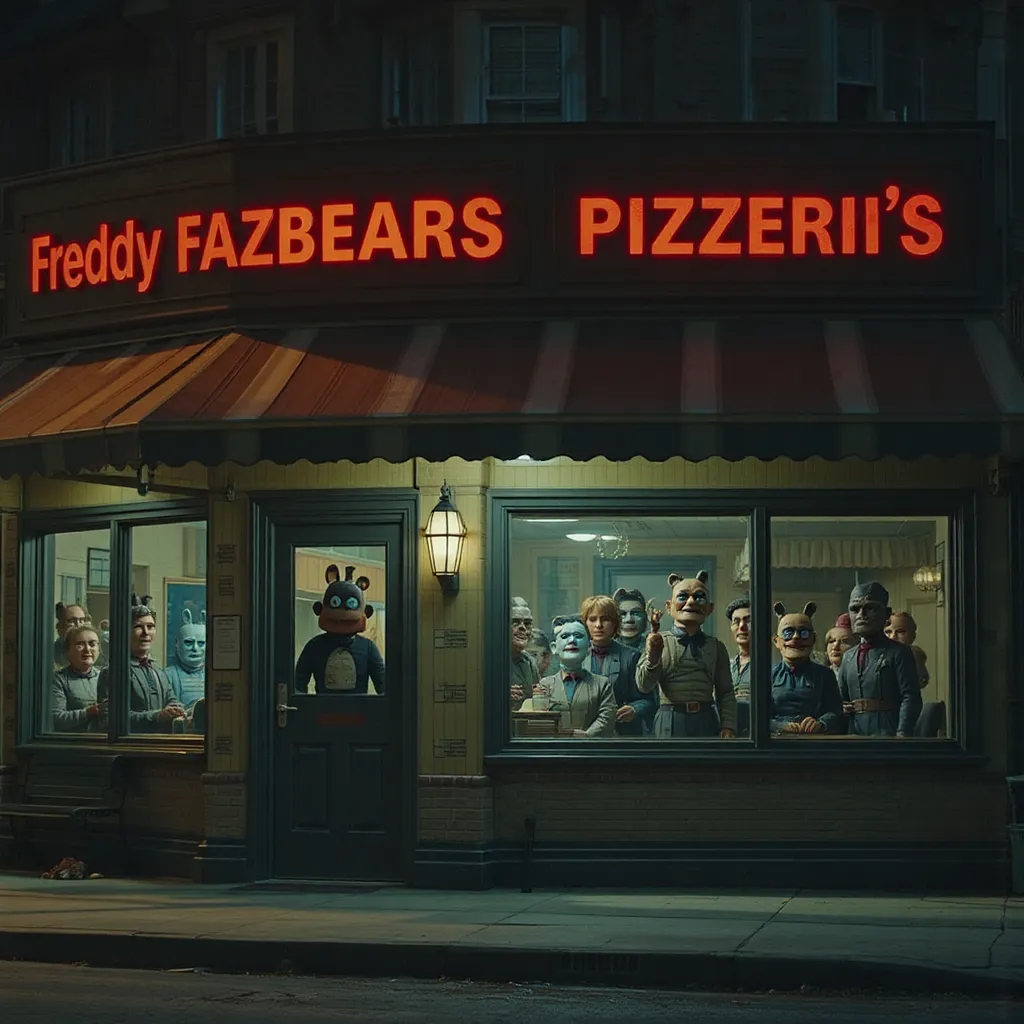
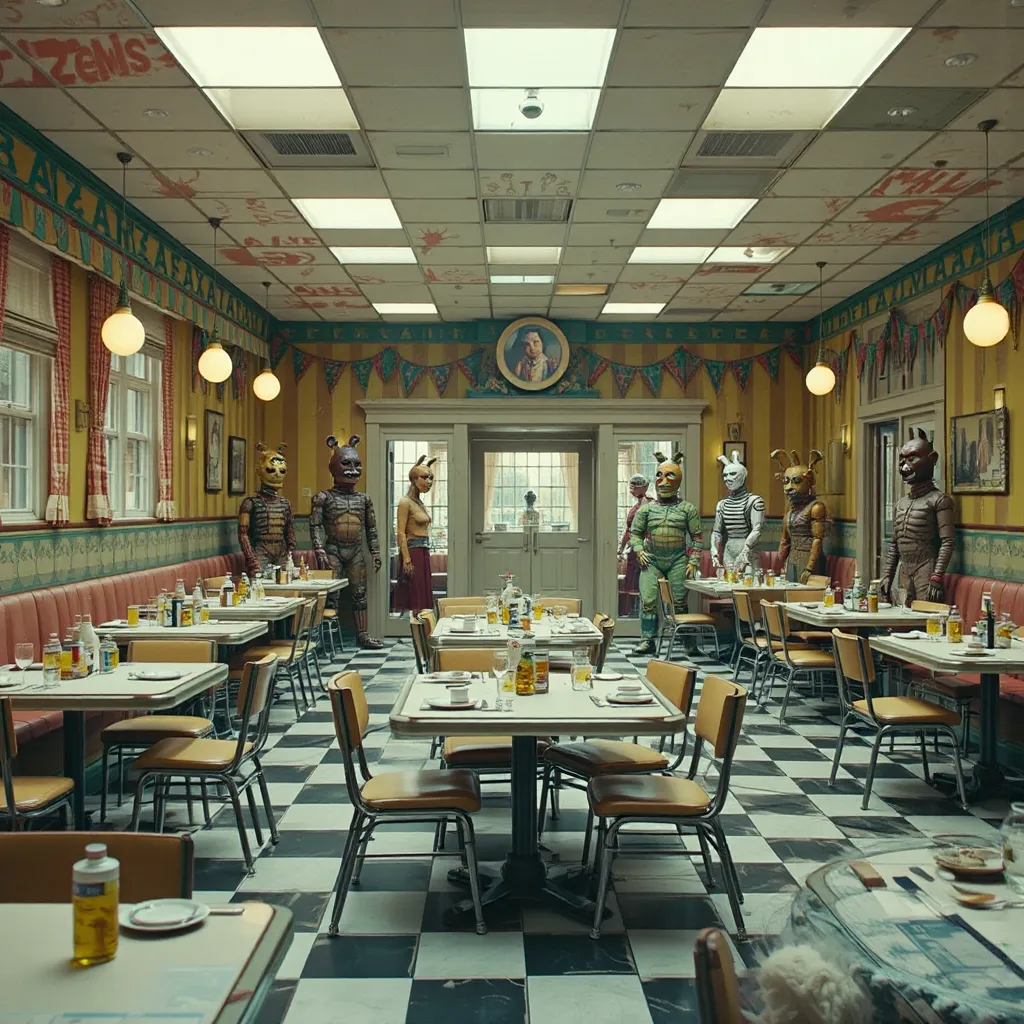
Welcome to Freddy Fazbear’s Pizzeria, a once-popular family-friendly restaurant in a small town, known for its animatronic characters that entertain guests through music and dance. The establishment opened its doors in the late 1980s, quickly becoming a staple for birthday parties and school outings. However, behind the cheerful facade lies a dark history.

The pizzeria’s cheerful atmosphere started to shift when numerous incidents involving the animatronics and mysterious disappearances plagued the establishment. Tales began to circulate about the horrifying past of the restaurant, including alleged accidents and the disappearance of children. The animatronics, originally designed to delight children, began to develop a sinister reputation, sparking fear among parents and causing the restaurant’s popularity to wane.

After the tragic events led to closures and numerous lawsuits, the pizzeria became dilapidated, with remnants of its cheerful past still haunting the halls. Despite its dark history, Freddy Fazbear’s Pizzeria has reopened for nightly security shifts, offering a chilling opportunity for workers to earn money but at great personal risk.

Image Generation


Character Choices

As the new night security guard at Freddy Fazbear’s Pizzeria, you experience the eerie atmosphere firsthand.

Audio Generation

Summary of Last Turn

You entered Freddy Fazbear’s Pizzeria at night, a place filled with a dark history of animatronics and mysterious disappearances. The pizzeria’s once cheerful atmosphere feels ominous, and you’ve been presented with choices on how to navigate this eerie environment.

Investigate the static on the security cameras, hoping to catch sight of one of the animatronics.

First Night: The Unseen Threat

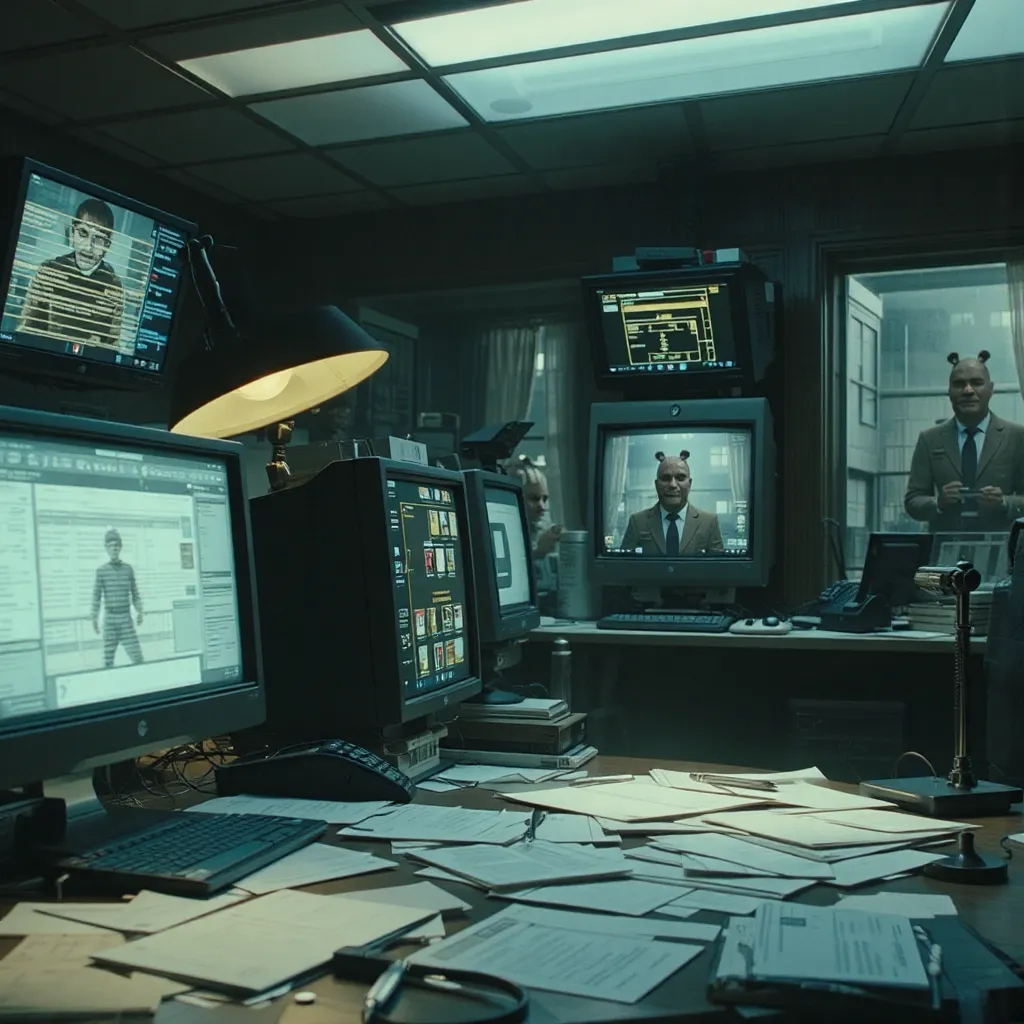
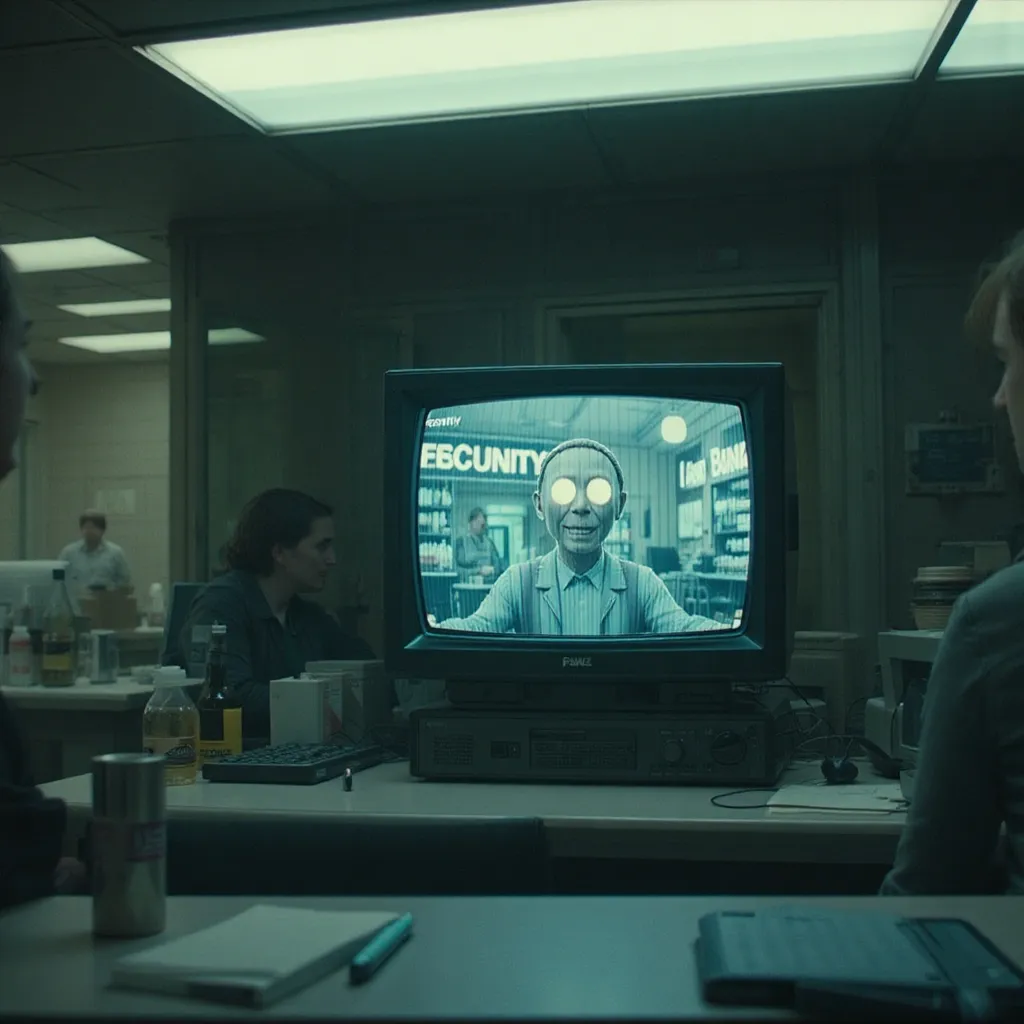
As you settle into the security office, the buzzing of fluorescent lights amplifies the tension. Static fills the monitors, offering brief glimpses of the eerie pizzeria. Shadows move, and you strain to focus, dread creeping over you. Suddenly, one of the animatronics, Bonnie, flickers into view, his eyes glowing ominously. Frantically, you realize that remaining vigilant is crucial. You can attempt to track Bonnie’s movements, but the risk of drawing attention is palpable.

What will you do?

close the left door

Tension Escalates

You swiftly extend your hand to close the left door, heart pounding as the creaking sound echoes through the security office. With the door now secured, you feel momentarily relieved. But static on the monitor surges again, revealing Bonnie creeping dangerously close. Shadows dance along the walls, and you can sense the animatronics lurking just beyond your barrier. It’s now a life-or-death decision as you watch the flickering screen.

What will you do next?

Incentivar a equipe com uma fa…

Start

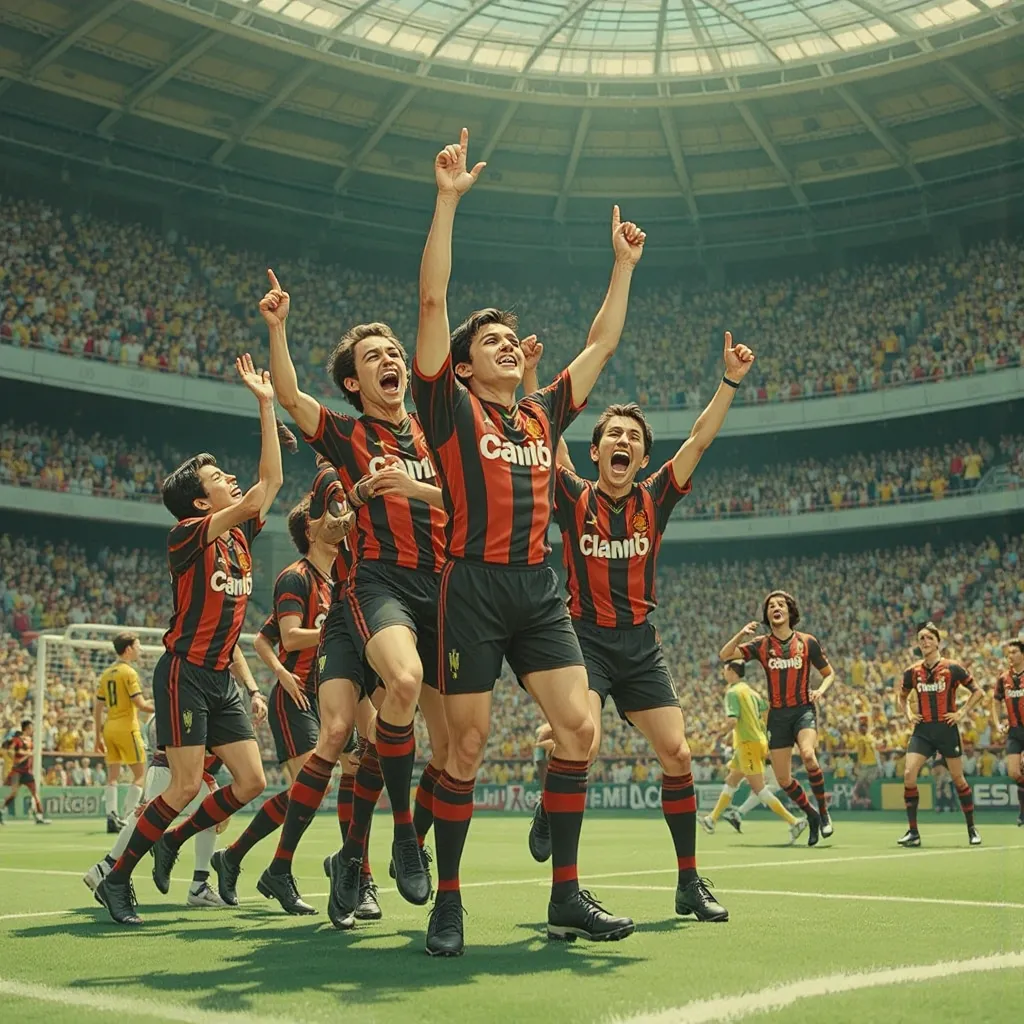
A história do futebol brasileiro é marcada por rivalidades intensas e momentos memoráveis, com destaque para partidas épicas entre os grandes times do país. Uma dessas ocasiões ficou gravada na memória coletiva: quando o Flamengo, em uma exibição de talento e determinação, derrotou o Santos por um placar incrível de cinco a um. Essa partida aconteceu na década de 1960, um período de crescimento exponencial do futebol brasileiro, com times se tornando símbolos nacionais e jogadores ampliando suas lendas. O Maracanã, palco dessa batalha, foi testemunha de uma noite histórica que entrou para os livros de recordes, trazendo orgulho ao Flamengo e provocando reflexão sobre o poder e a paixão do esporte.


Vamos agora ao momento crucial da história. Você, como personagem principal, tem a oportunidade de decidir o próximo passo na sua trajetória durante esse jogo inesquecível.

Incentivar a equipe com uma fala motivadora para aumentar a moral antes do próximo gol.

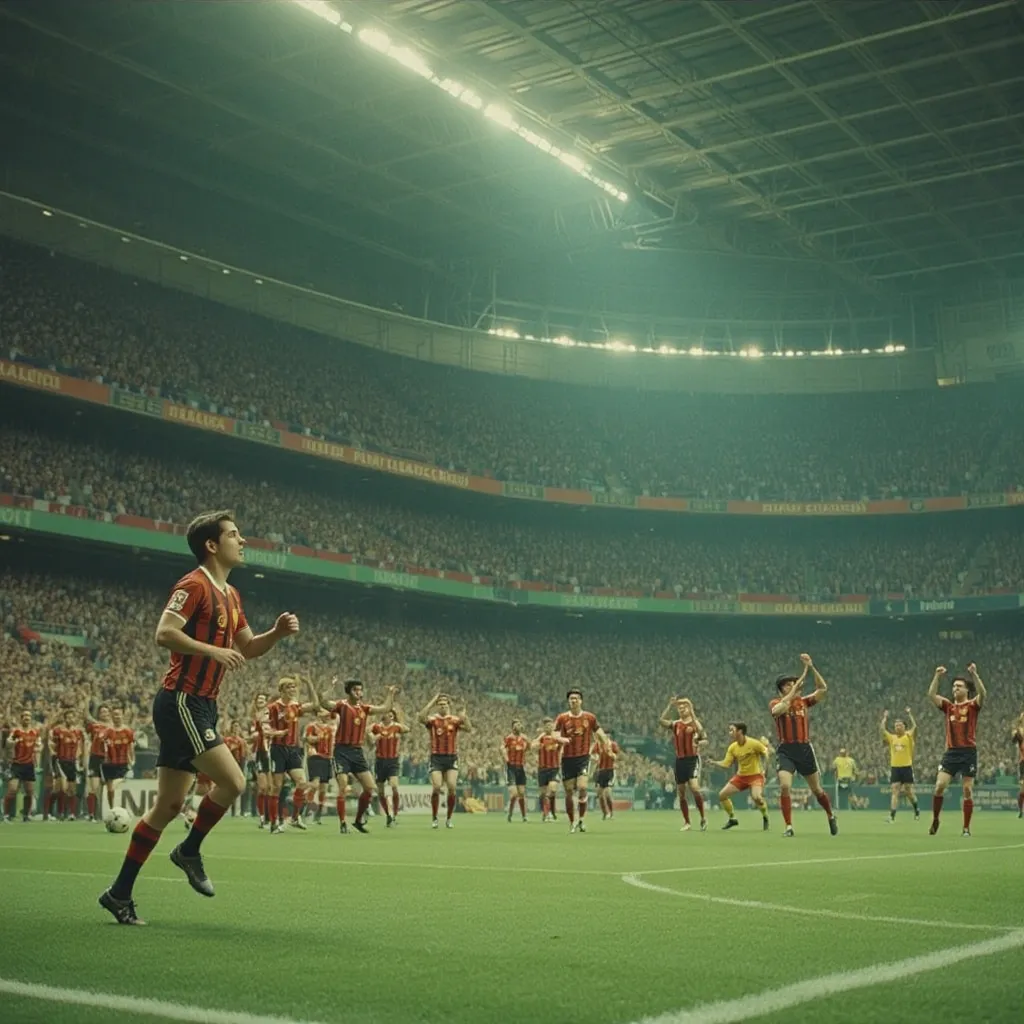
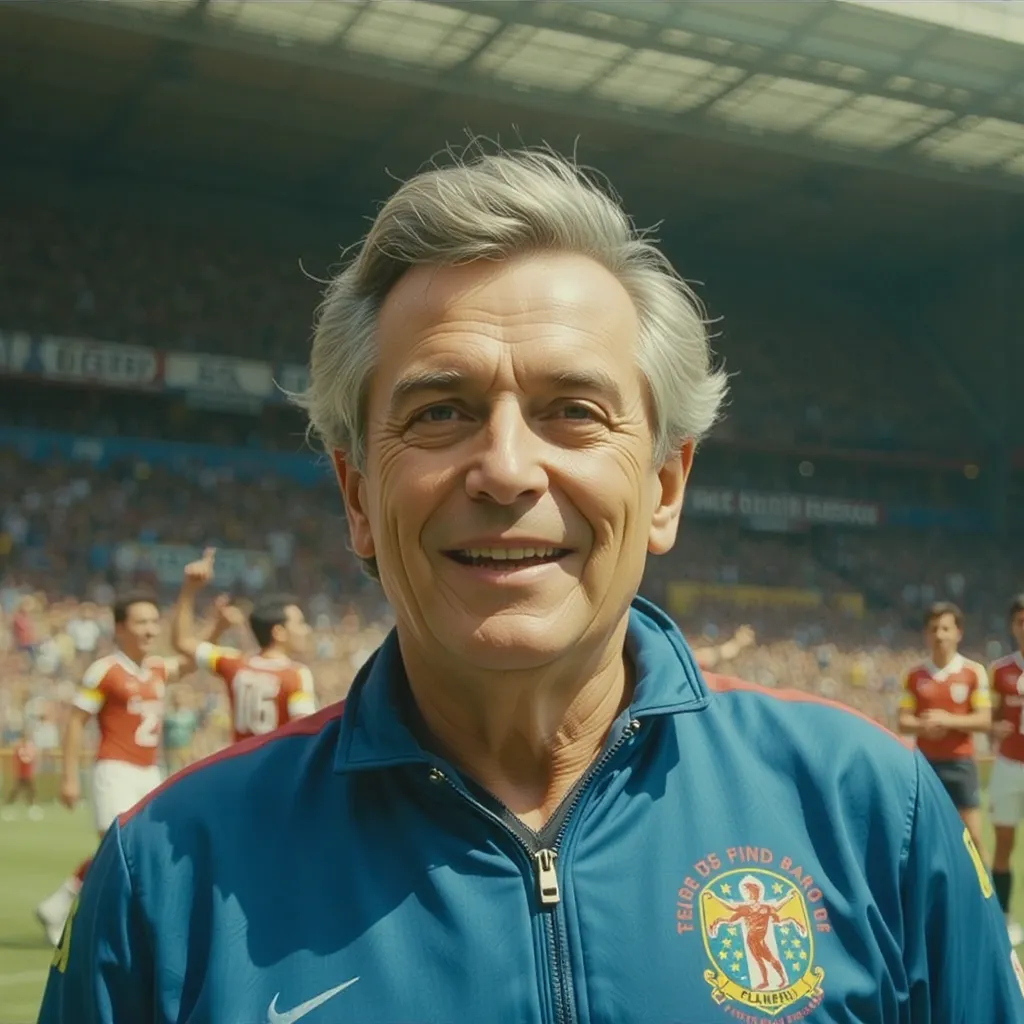
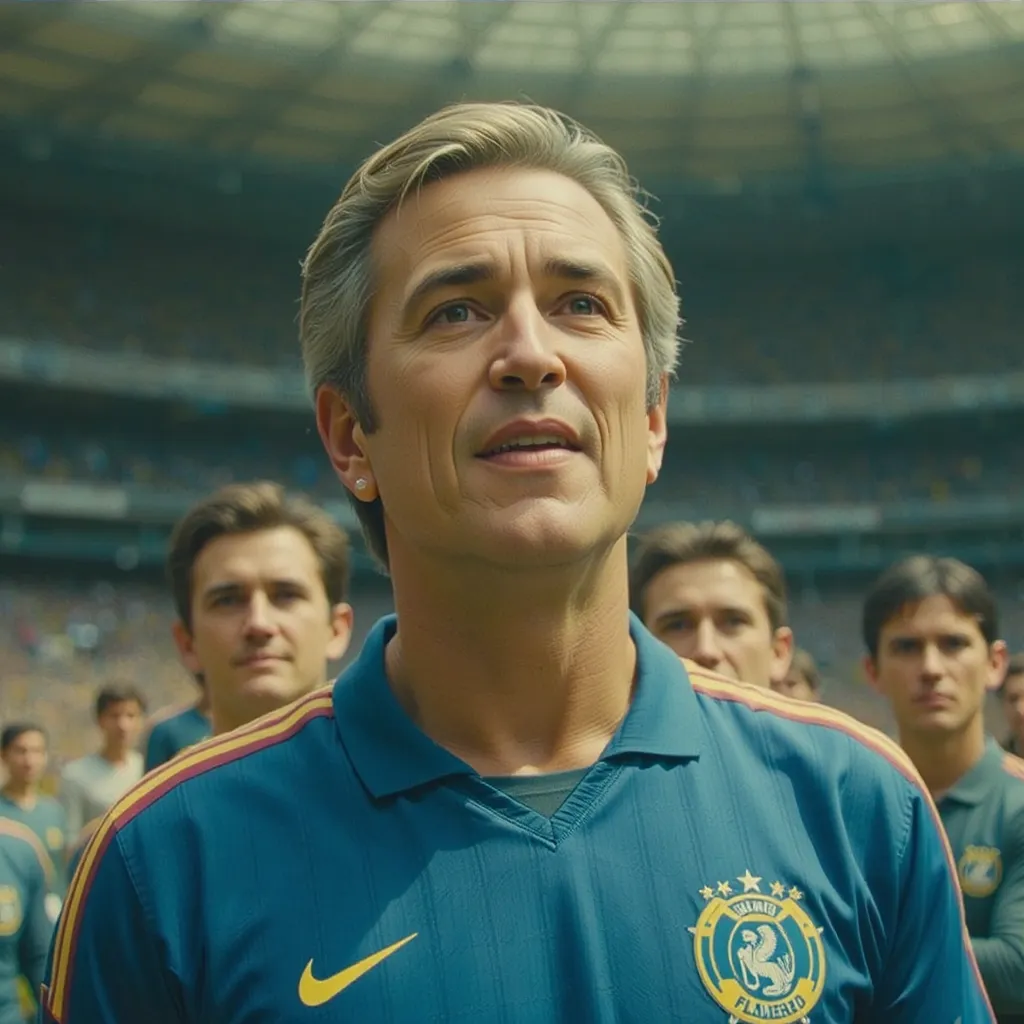
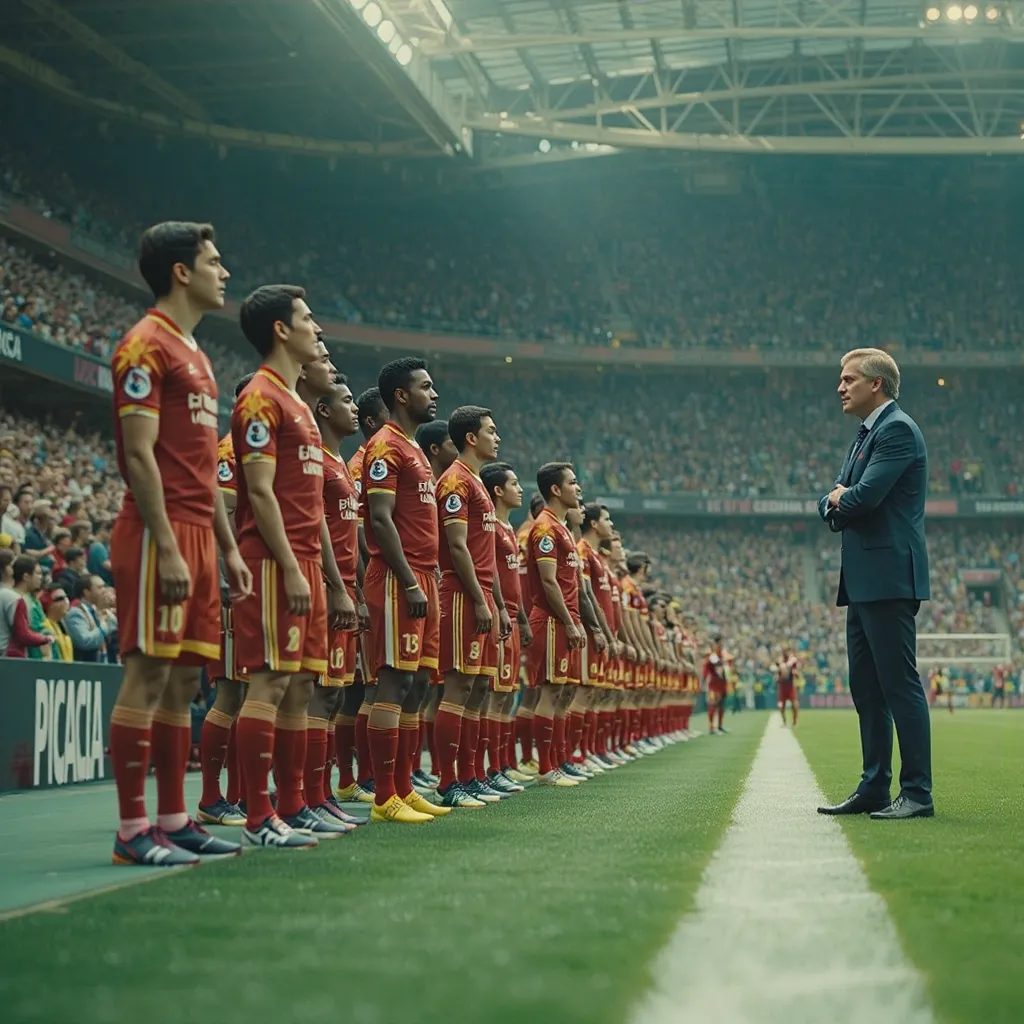
Momento de alta tensão no Maracanã, os jogadores do Flamengo se reúnem, buscando inspiração antes do próximo ataque. A torcida vibra, sabendo que a vitória de 5 a 1 sobre o Santos pode ficar ainda mais épica. O técnico levanta a voz, motivando a equipe a manter o ritmo e não se acomodar. Uma decisão crucial se aproxima: qual mensagem motivacional o técnico deve transmitir?

Incentivar a equipe a lutar pelo recorde de gols nesta noite.

Momento decisivo em campo: Flamengo mira o recorde de gols nesta noite de festa. O técnico motiva a equipe no vestiário, destacando a importância de manter o ritmo ofensivo e aproveitar cada oportunidade. Os jogadores se mostram animados, cientes da grande chance de fazer história. Com a torcida fervorosa no estádio, a equipe se prepara para dar o máximo. Uma decisão importante precisa ser tomada: concentrar-se na força ofensiva ou reforçar a defesa para proteger a goleada?

Focar na ofensiva e tentar marcar mais gols

A equipe do Flamengo, impulsionada pela vitória contundente de 5 a 1 sobre o Santos, decide adotar uma postura ofensiva ainda mais agressiva na partida. Os jogadores encaram a próxima fase como uma oportunidade de consolidar sua superioridade. O técnico reforça a estratégia na coletiva, incentivando os atacantes a criarem oportunidades enquanto a defesa mantém a linha. Uma decisão crucial surge: manter a ofensiva total ou equilibrar com reforços defensivos. A tensão aumenta.

Manter o foco na ofensiva total e tentar marcar mais gols.

Domínio total após a vitória esmagadora de 5 a 1 contra o Santos, o Flamengo decide seguir com ataque agressivo para ampliar o placar. A equipe está energizada, e o técnico incentiva a manter o ritmo ofensivo, buscando marcar mais. Os jogadores se preparam para uma jogada decisiva que pode consolidar a força do time. A defesa do adversário começa a mostrar sinais de desgaste, mas uma decisão errada pode custar caro.
Você quer:

Equilibrar ataque e defesa para garantir a vitória

Momento decisivo: Flamengo mantém o ritmo ofensivo após a goleada de 5 a 1 contra o Santos. O técnico percebe que a vantagem cativa os adversários, mas o cansaço também aumenta. A equipe precisa decidir entre continuar com o ataque agressivo ou reforçar a defesa para proteger o resultado. A estratégia certo pode consolidar a vitória, mas um erro pode abrir espaço para uma reação do Santos. A decisão é crucial para o andamento do jogo e o desfecho da partida.

Você acha melhor:

À story of a south African For…

À story of a south African Forex trader who struggling until they meet an angel the market

Right then, let’s spin a yarn about a South African Forex trader, eh? One who’s having a proper tough time of it until they encounter a bit of market magic,Right then, let’s spin a yarn about a South African Forex trader, eh? One who’s having a proper tough time of it until they encounter a bit of market magic, shall we?

Thabo was his name, and trading Forex was his game, or at least, what he desperately wanted it to be. He lived in a small flat in Johannesburg, overlooking a street that never quite seemed to sleep. Days bled into nights as he stared at charts, the flickering screens reflecting in his tired eyes. He’d started with a bit of capital, saved up from years of hard graft, but the market, that fickle beast, had been gobbling it up faster than a hungry lion at a braai.

He’d tried everything shall we?

Thabo was his name, and trading Forex was his game, or at least, what he desperately wanted it to be. He lived in a small flat in Johannesburg, overlooking a street that never quite seemed to sleep. Days bled into nights as he stared at charts, the flickering screens reflecting in his tired eyes. He’d started with a bit of capital, saved up from years of hard graft, but the market, that fickle beast, had been gobbling it up faster than a hungry lion at a braai.

He’d tried everything: technical analysis, fundamental analysis, even listening to the advice of that bloke down the pub who claimed to have inside knowledge. But nothing seemed to stick. He was losing hope, the dream of financial freedom fading with each pip lost. He: technical analysis, fundamental analysis, even listening to the advice of that bloke down the pub who claimed to have inside knowledge. But nothing seemed to stick. He was losing hope, the dream of financial freedom fading with each pip lost. He was starting to think he’d have to pack it all in and go back to working at his uncle’s car repair shop.

One particularly brutal Tuesday, after a series of disastrous trades, Thabo slumped back in his chair, head in his hands. “Ag, what’s the point?” he muttered to himself was starting to think he’d have to pack it all in and go back to working at his uncle’s car repair shop.

One particularly brutal Tuesday, after a series of disastrous trades, Thabo slumped back in his chair, head in his hands. “Ag, what’s the point?” he muttered to himself, the despair thick in his voice.

Suddenly, the lights flickered, and a shimmering figure appeared in his small office. Not a literal angel with wings and a halo, mind you, but a woman with eyes that sparkled like diamonds and an aura of calm that washed over Thabo like a cool summer breeze. She was, the despair thick in his voice.

Suddenly, the lights flickered, and a shimmering figure appeared in his small office. Not a literal angel with wings and a halo, mind you, but a woman with eyes that sparkled like diamonds and an aura of calm that washed over Thabo like a cool summer breeze. She was dressed in a sharp, modern suit, but there was something otherworldly about her.

“Don’t give up, Thabo,” she said, her voice like smooth jazz. “The market is a puzzle, not a monster. You just need the right pieces.”

Thabo, understandably gobsmacked, dressed in a sharp, modern suit, but there was something otherworldly about her.

“Don’t give up, Thabo,” she said, her voice like smooth jazz. “The market is a puzzle, not a monster. You just need the right pieces.”

Thabo, understandably gobsmacked, could only stammer, “Who… who are you?”

“Let’s just say I’m a friend,” she replied with a knowing smile. “I’m here to help you see the market with new eyes.”

Over the next few weeks, the woman – who introduced herself as Aisha – became Thabo’s mentor. She didn’t give him easy answers or magical formulas. Instead, she taught him to understand market psychology, to read the subtle clues in the price action, and, most importantly, to control his emotions. She emphasised risk management, patience, and the importance of having a solid trading plan. She explained that it wasn’t about getting rich quick but about consistent, disciplined growth.

Aisha also encouraged Thabo to connect with other traders, to share ideas and learn from their experiences. She showed him how to use trading tools more effectively and how to stay updated on global economic events. She stressed the importance of taking breaks and maintaining a healthy lifestyle, reminding him that a clear mind was essential for making sound decisions.

Slowly but surely, Thabo’s trading started to improve. He began to see patterns he’d missed before, to anticipate market movements with greater accuracy. He was still cautious, but his confidence grew with each successful trade. He learned to accept losses as part of the game and to not let them derail his overall strategy.

One day, Aisha told Thabo that her work was done. “You have the knowledge and the skills you need to succeed,” she said. “Now, it’s up to you to put them could only stammer, “Who… who are you?”

“Let’s just say I’m a friend,” she replied with a knowing smile. “I’m here to help you see the market with new eyes.”

Over the next few weeks, the woman – who introduced herself as Aisha – became Thabo’s mentor. She didn’t give him easy answers or magical formulas. Instead, she taught him to understand market psychology, to read the subtle clues in the price action, and, most importantly, to control his emotions. She emphasised risk management, patience, and the importance of having a solid trading plan. She explained that it wasn’t about getting rich quick but about consistent, disciplined growth.

Aisha also encouraged Thabo to connect with other traders, to share ideas and learn from their experiences. She showed him how to use trading tools more effectively and how to stay updated on global economic events. She stressed the importance of taking breaks and maintaining a healthy lifestyle, reminding him that a clear mind was essential for making sound decisions.

Slowly but surely, Thabo’s trading started to improve. He began to see patterns he’d missed before, to anticipate market movements with greater accuracy. He was still cautious, but his confidence grew with each successful trade. He learned to accept losses as part of the game and to not let them derail his overall strategy.

One day, Aisha told Thabo that her work was done. “You have the knowledge and the skills you need to succeed,” she said. “Now, it’s up to you to put them into practice.”

And with that, she vanished as suddenly as she had appeared, leaving Thabo alone in his flat, the familiar glow of the trading screens illuminating his face. But this time, there was no despair in his eyes, only determination. He had faced the market monster and, with the help of his into practice.”

And with that, she vanished as suddenly as she had appeared, leaving Thabo alone in his flat, the familiar glow of the trading screens illuminating his face. But this time, there was no despair in his eyes, only determination. He had faced the market monster and, with the help of his “angel,” he was finally ready to tame it. He knew the road ahead wouldn’t be easy, but he was confident that he could achieve his dream of financial freedom, one trade at a time.

Batman Tales #16

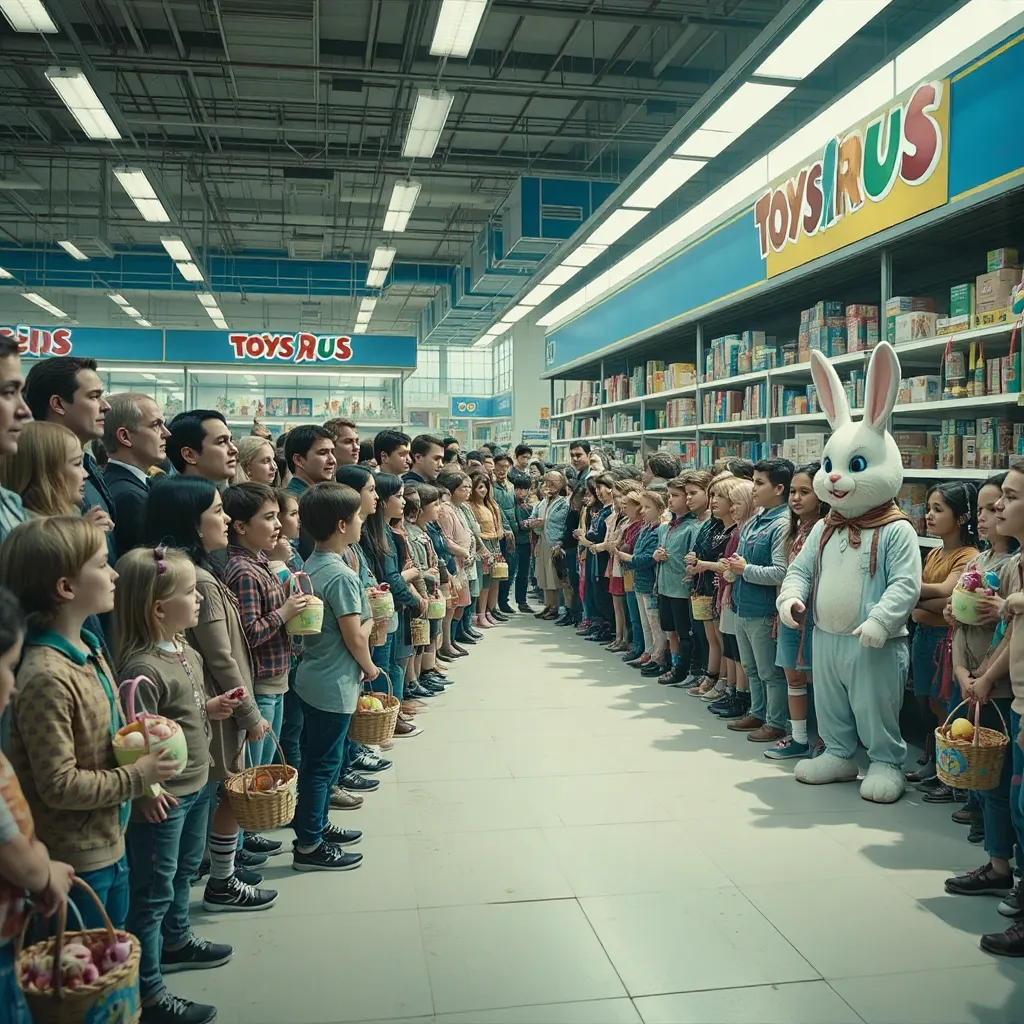
It was Easter morning at Toys R Us in Gotham City, kids by the dozen lined up to see the Easter Bunny

The fluorescent lights of Toys R Us hummed, casting a pale glow on the scene. A line of eager children, clutching pastel-colored baskets, snaked through the aisles, their eyes wide with anticipation. It was Easter morning in Gotham City, and despite the city’s reputation, the spirit of the holiday was alive and well, at least within these brightly colored walls. At the front of the line, a slightly oversized Easter Bunny costume bounced nervously, its floppy ears twitching. Even in Gotham, some traditions held strong.

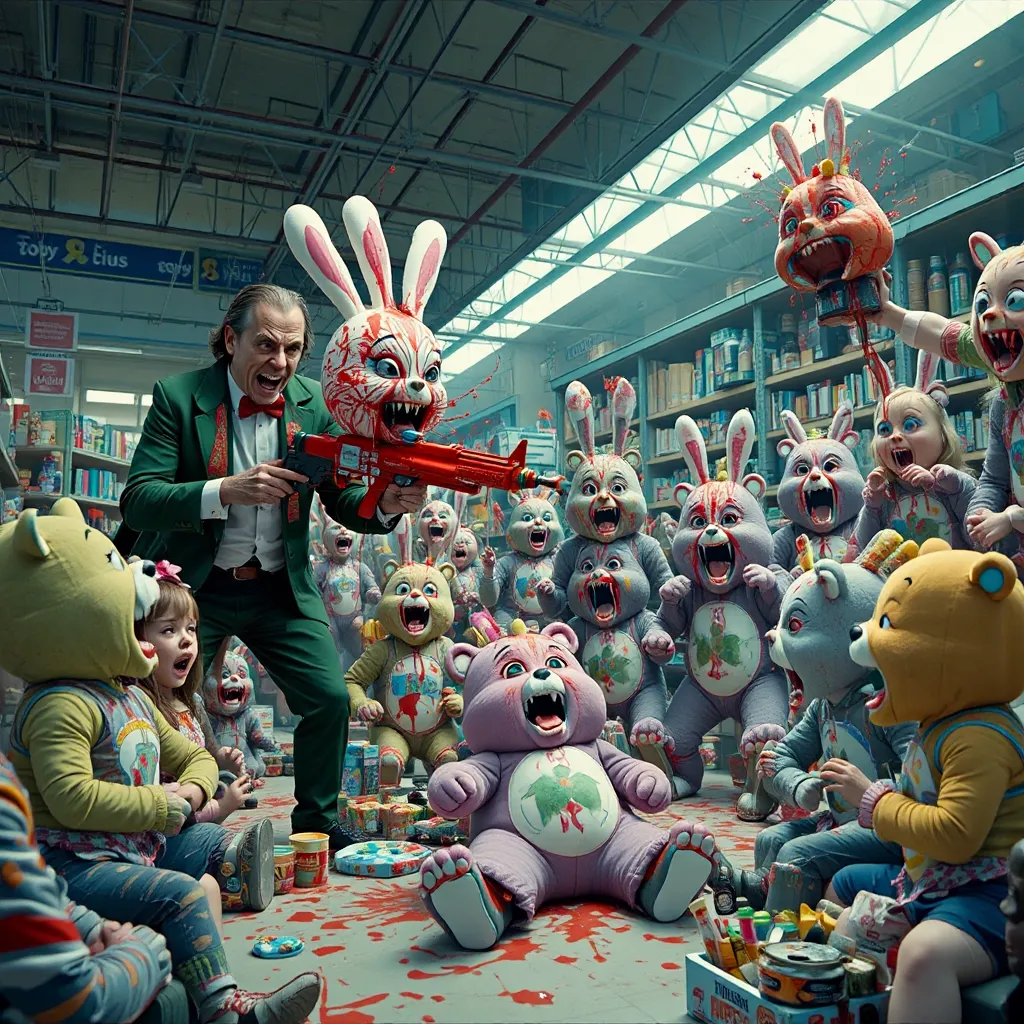
The Easter Bunny was soon due to come out, kids were gather around, soon the Easter Bunny came out the door but then he took his head off revealing it was The Riddler, he took out a paint gun and spalted red paint at the kids, the kids were screaming, he soon then used a wand to bring Talking Care Bears to life to attack the kids and rob the store

The anticipation in the air was thick enough to cut with a knife. Finally, the door behind the giant inflatable dinosaur creaked open, and the Easter Bunny emerged! But something was off. The bunny seemed… too tall? Too menacing? Then, with a flourish, the head came off, revealing the sneering face of The Riddler.A collective gasp rippled through the crowd. Before anyone could react, he pulled out a brightly colored paint gun, but instead of harmless dye, it was filled with thick, crimson paint. He splattered the horrified children, their Easter outfits now ruined, their screams echoing through the store.

“Riddle me this, kiddies! What’s red and white and crying all over?” The Riddler cackled, then pulled out a bizarre-looking wand. With a flick of his wrist, the display of Talking Care Bears actually came to life. Their sweet voices twisted into menacing growls as they lumbered off the shelves, claws extended, ready to terrorize the children and help The Riddler rob the store. Easter in Gotham had taken a decidedly dark turn.

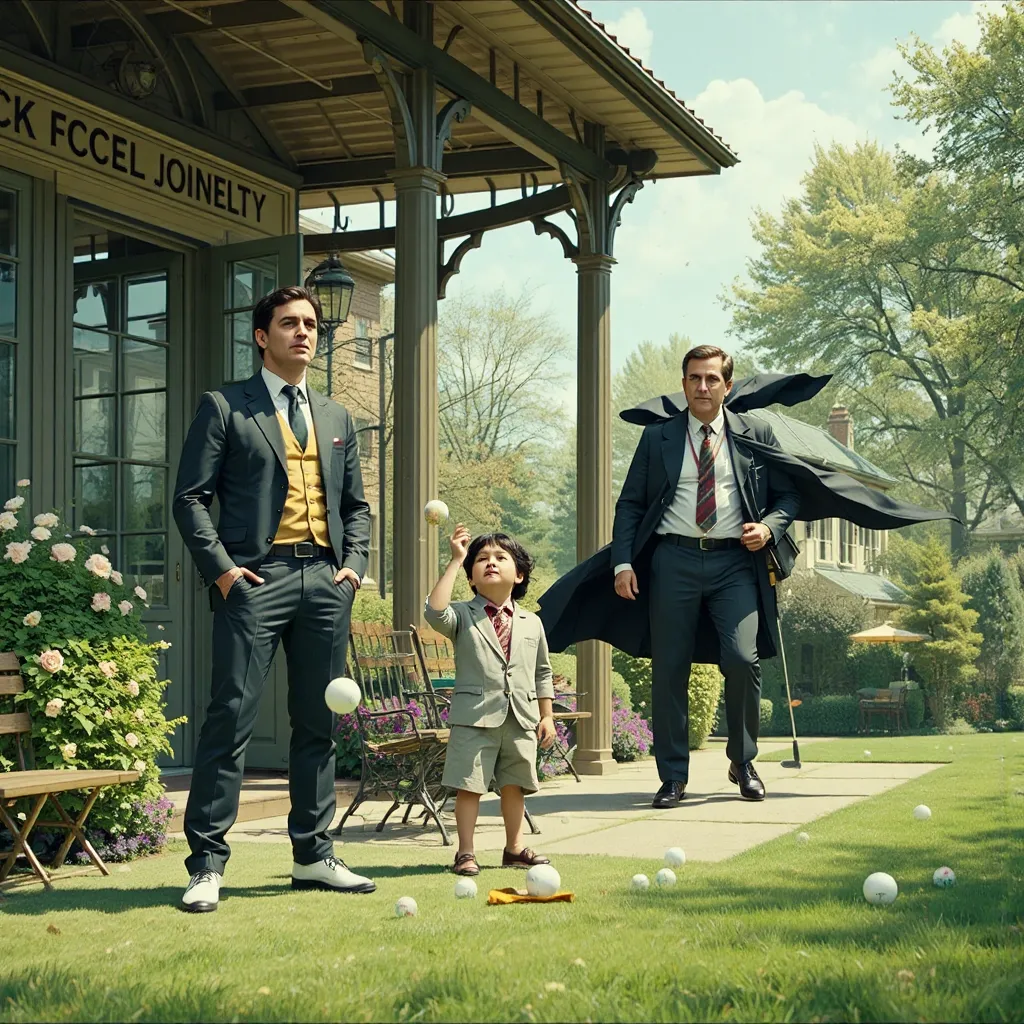
Meanwhile, Batman and Robin were at the Gotham Country Club hosting a Easter Golf Tourament when Gordon arrived

Sirens wailed in the distance, a familiar soundtrack to Gotham’s Sunday morning. But miles away, at the manicured greens of the Gotham Country Club, a different kind of chaos was brewing. Bruce Wayne, impeccably dressed in golf attire despite the grim set of his jaw, was hosting the annual Easter Golf Tournament. Beside him, Dick Grayson, ever the picture of youthful energy, was attempting to juggle golf balls, failing miserably.

Suddenly, Commissioner Gordon’s car screeched to a halt near the first tee. He leaped out, his trench coat flapping in the wind, his face a mask of urgency. “Wayne! Grayson! We’ve got a situation at Toys R Us. Riddler. Care Bears. It’s… messy.” He pinched the bridge of his nose, clearly wishing he were anywhere else. “I think you two need to see this.”

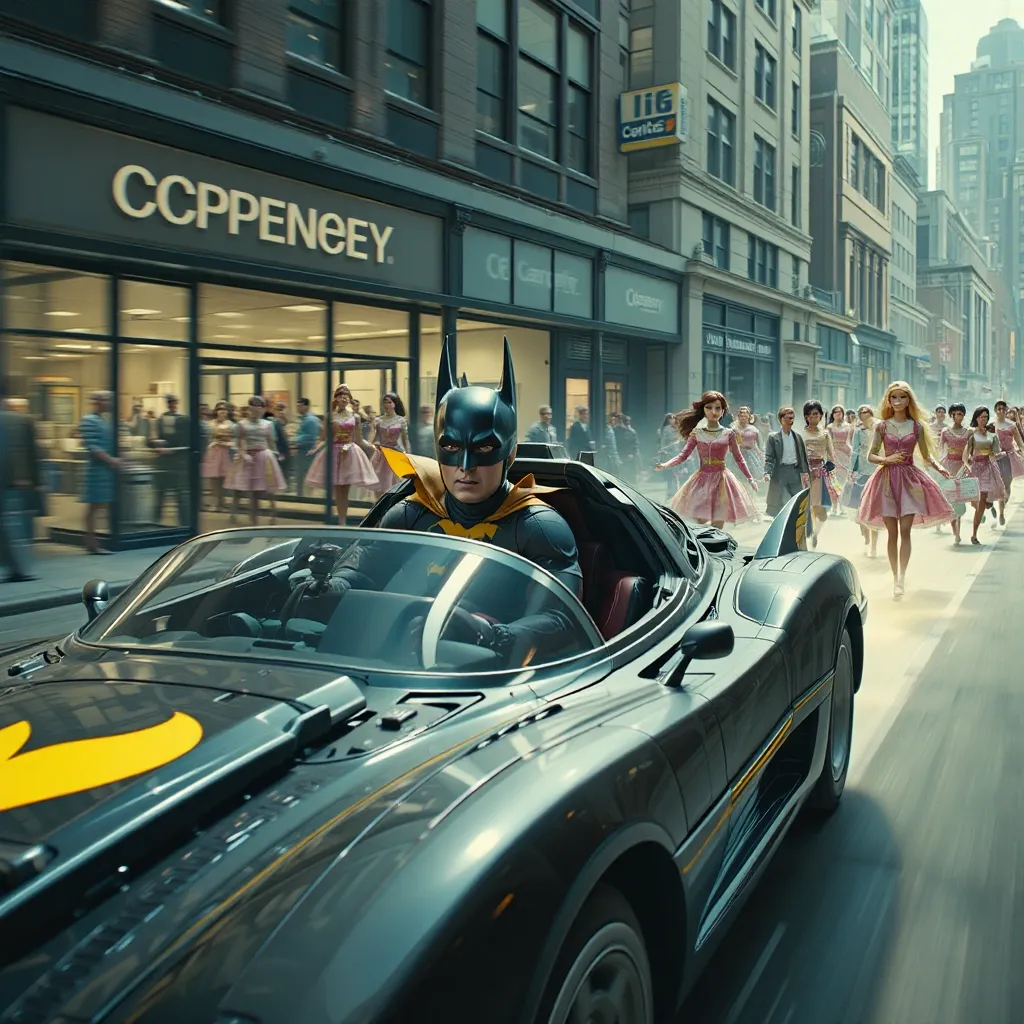
Batman and Robin soon head for town when they see a group of Barbie dolls robbing JcPenney

Bruce’s jaw tightened. “Care Bears? Gordon, you’re not pulling my leg?” He exchanged a grim look with Dick. “Looks like our golf game is indefinitely postponed.”

Within minutes, the Batmobile, a sleek black beast amidst the pastel Easter decorations, roared out of the country club and sped towards downtown Gotham. As they approached the city center, a new, equally bizarre sight met their eyes. A swarm of Barbie dolls, wielding miniature crowbars and purses overflowing with stolen jewelry, were making their escape from JCPenney. These weren’t your average playthings; they were life-sized, plastic-faced criminals with a surprisingly effective smash-and-grab operation.

“Well, this is just getting weirder,” Robin quipped, adjusting his mask. “Looks like The Riddler’s really outdone himself this time.”

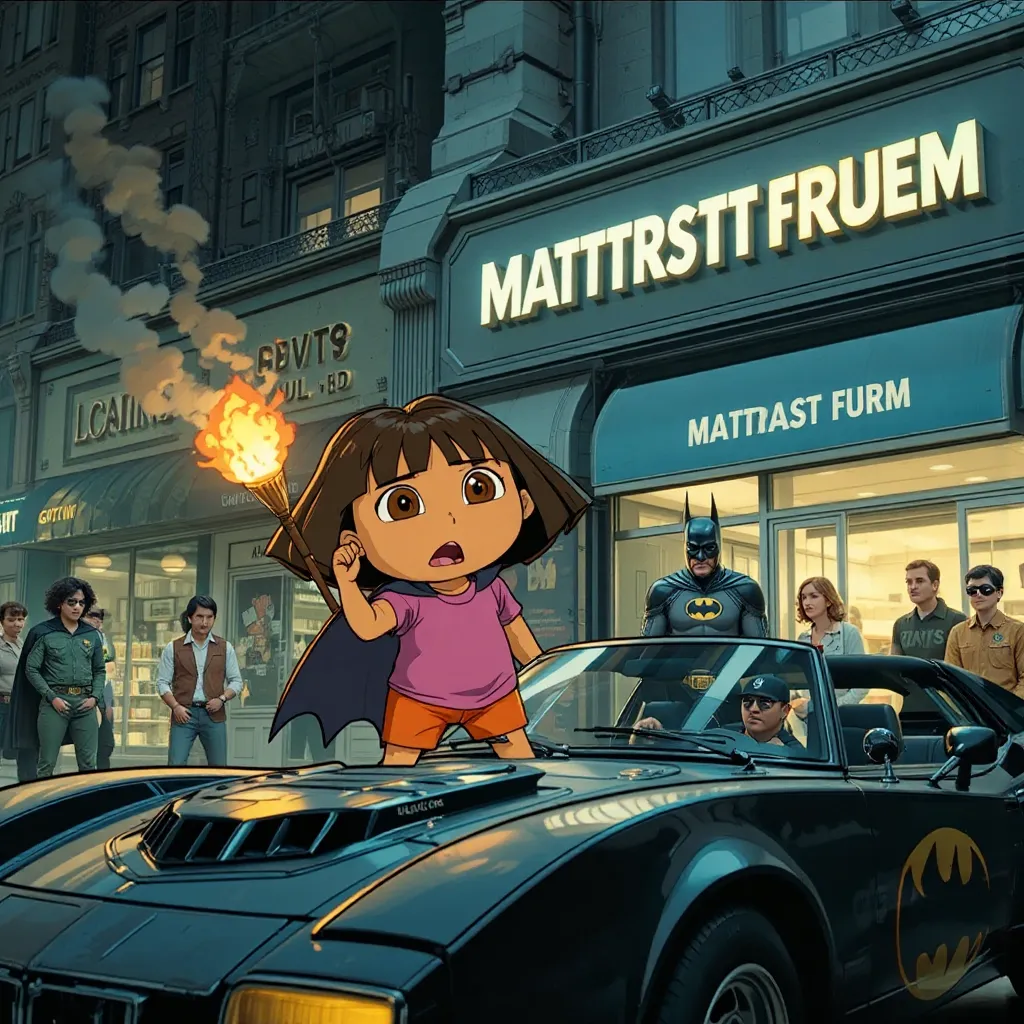
They then see a Dora doll setting fire to Mattress Firm, the doll had robbed the store which was closed for the holiday

Batman slammed on the brakes, the Batmobile screeching to a halt. “This is escalating quickly,” he growled, his voice a low rumble. “Riddler’s gone completely off the rails.”

And there, standing in front of the Mattress Firm, bathed in the flickering orange glow of the growing flames, was Dora the Explorer. But this wasn’t the friendly, map-toting Dora from the TV screen. This Dora was hardened, her usually cheerful expression replaced with a cold, calculating stare. She casually tossed a Molotov cocktail (fashioned, ironically, from a sippy cup) into the store, ensuring the fire would spread. The store, closed for Easter, was now engulfed in flames, the smell of burning mattresses filling the air.

“Dora the Explorer? Setting fires?” Robin exclaimed, incredulous. “What’s next, Blue’s Clues robbing a bank?”

Batman’s gaze narrowed. “This isn’t random. Riddler’s playing a game, and these toys are his pawns. He’s targeting specific locations, creating chaos and misdirection. We need to figure out his endgame, and fast.”

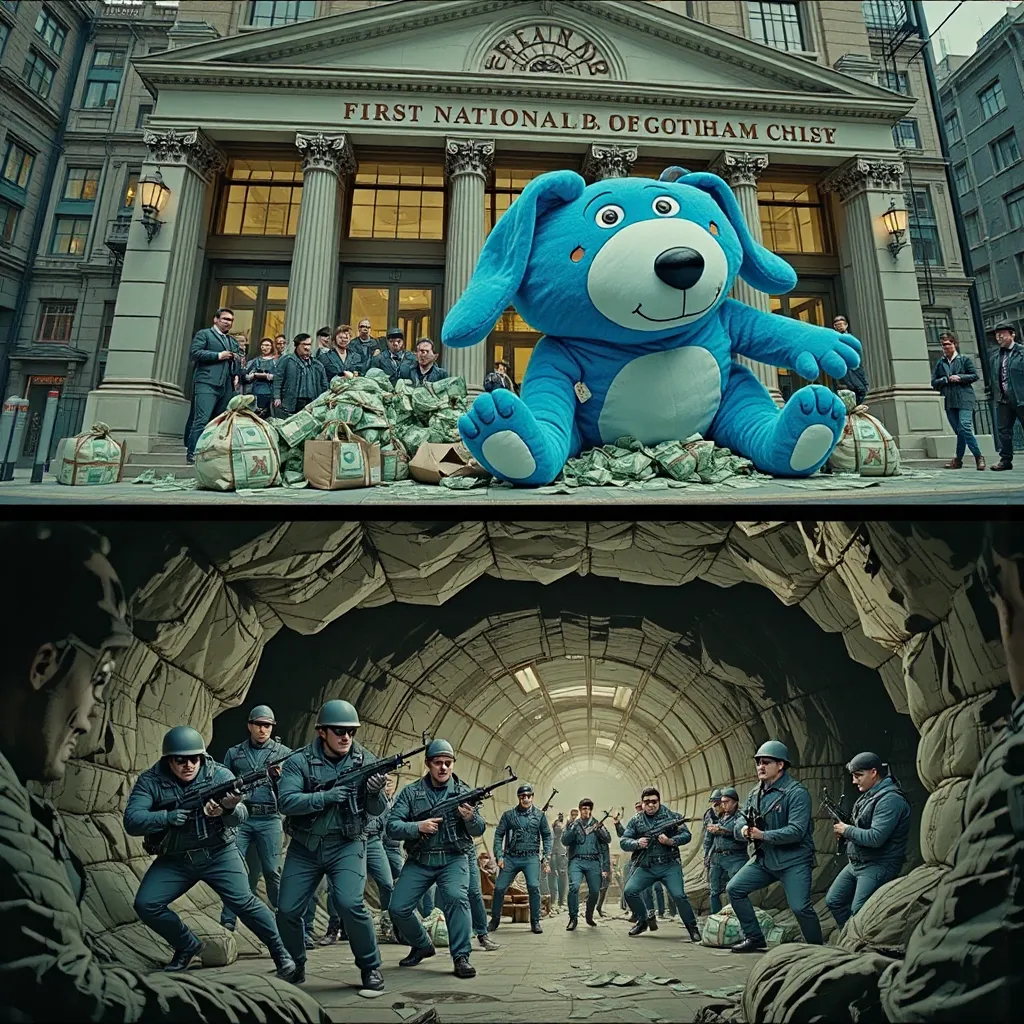
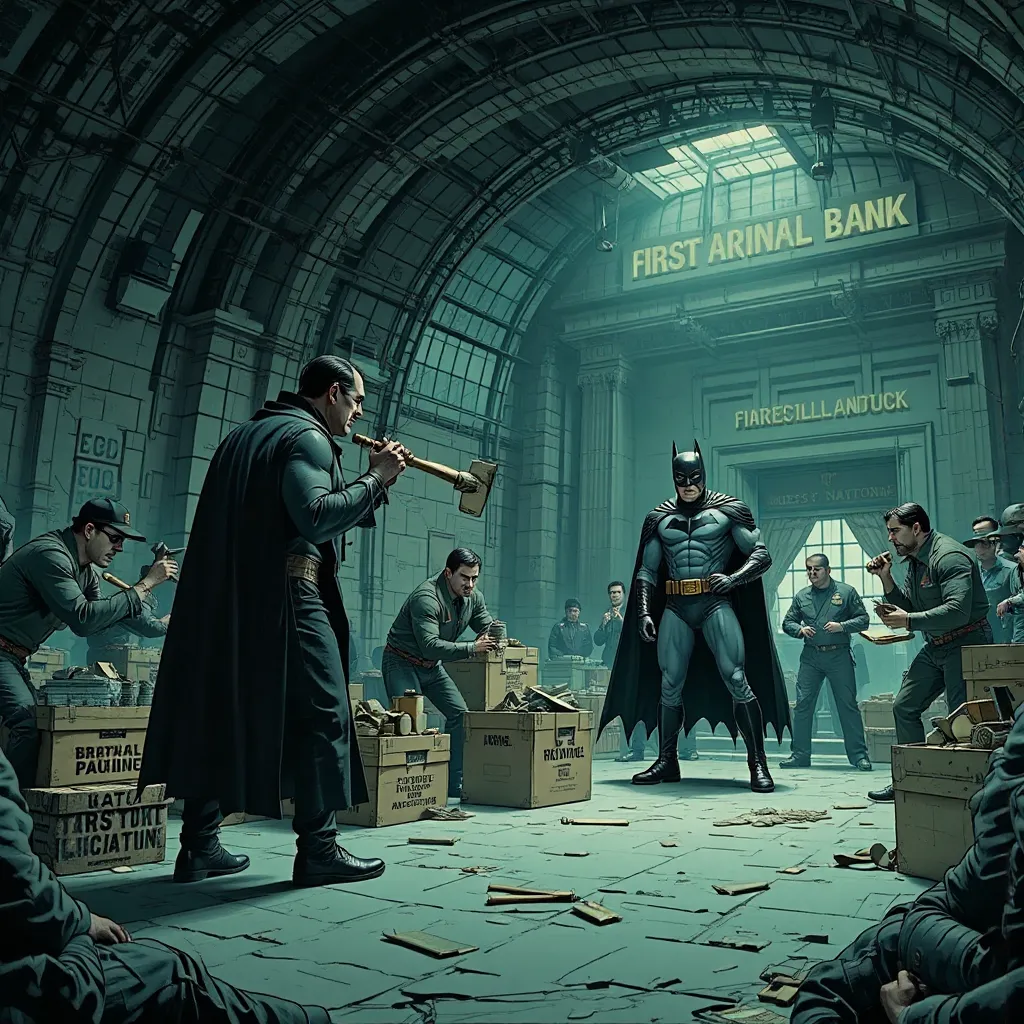
Robin was right, a Blue plush brought to life had robbed the 1st National Bank of Gotham

“Blue’s Clues robbing a bank? Don’t give him any ideas, Robin,” Batman muttered, already analyzing the situation. The escalating absurdity was a clear sign that The Riddler was pushing his own boundaries, reveling in the chaos. The toy-themed crime spree was no longer just a series of random acts; it was a carefully orchestrated distraction.

As if on cue, the Bat-Signal flared to life on a nearby rooftop, its beam cutting through the smoke and the faint pastel hues of the Easter decorations. Gordon was summoning them, and Batman knew whatever was happening, it was likely the culmination of Riddler’s twisted game.

Before they could even reach the signal, however, the Batmobile’s scanner blared an alert. “Multiple alarms triggered at the 1st National Bank of Gotham, Robin. And… wait for it… witness reports of a giant, animated Blue’s Clues plush making off with bags of money.”

Batman gripped the steering wheel, his knuckles white. “This is it. Riddler’s endgame. He’s using the chaos to cover something bigger.” He floored the accelerator, the Batmobile roaring towards the bank. “We need to stop him, and fast, before he pulls off whatever he’s really planning.”

What’s Riddler’s real plan?

Batman’s mind raced, piecing together the puzzle. The toy-themed chaos, the specific targets, the escalating absurdity… it all pointed to one thing: misdirection. Riddler wasn’t just robbing banks and setting fires for the thrill of it; he was using these outlandish crimes to mask a far more elaborate scheme.

“He’s not after money, Robin,” Batman said, his voice grim. “This is about something else entirely. He’s using the chaos to create a smokescreen, to distract us from his real target.”

Robin, his brow furrowed in concentration, chimed in, “But what could be more valuable than all the money in the First National Bank?”

Batman’s eyes narrowed. “Something that isn’t in the bank yet. Something he needs to get into the bank.” He paused, a chilling realization dawning on him. “The Gotham Depository. That’s it. He’s planning to raid the Gotham Depository.”

The Gotham Depository wasn’t just a bank vault; it was a secure facility beneath the First National Bank, housing some of Gotham’s most valuable and irreplaceable artifacts, documents, and heirlooms. It was a treasure trove, and Riddler was about to make off with the crown jewels.

“He’s using the toys as a distraction, drawing our attention away from the real target,” Batman explained, “While the chaos unfolds above ground, he’s got a team tunneling into the Depository from below. The toys are just a means to an end.”

Batman has a plan, he gets his Bat laser out to destroy Blue

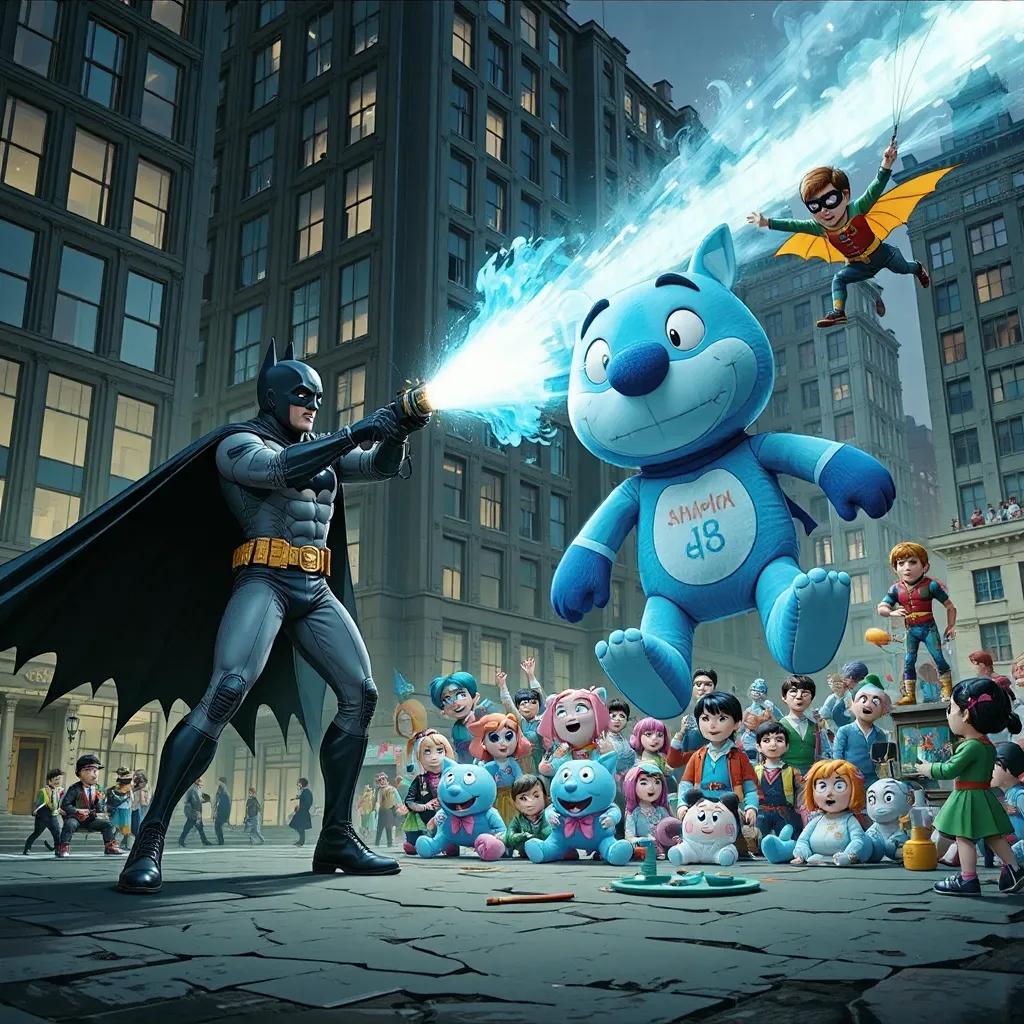
“Robin, we have to split up. You deal with Blue and the rest of these… animated abominations. Keep them contained, minimize the damage. I’m going after Riddler and his crew in the Depository.” Batman barked, his voice tight with urgency.

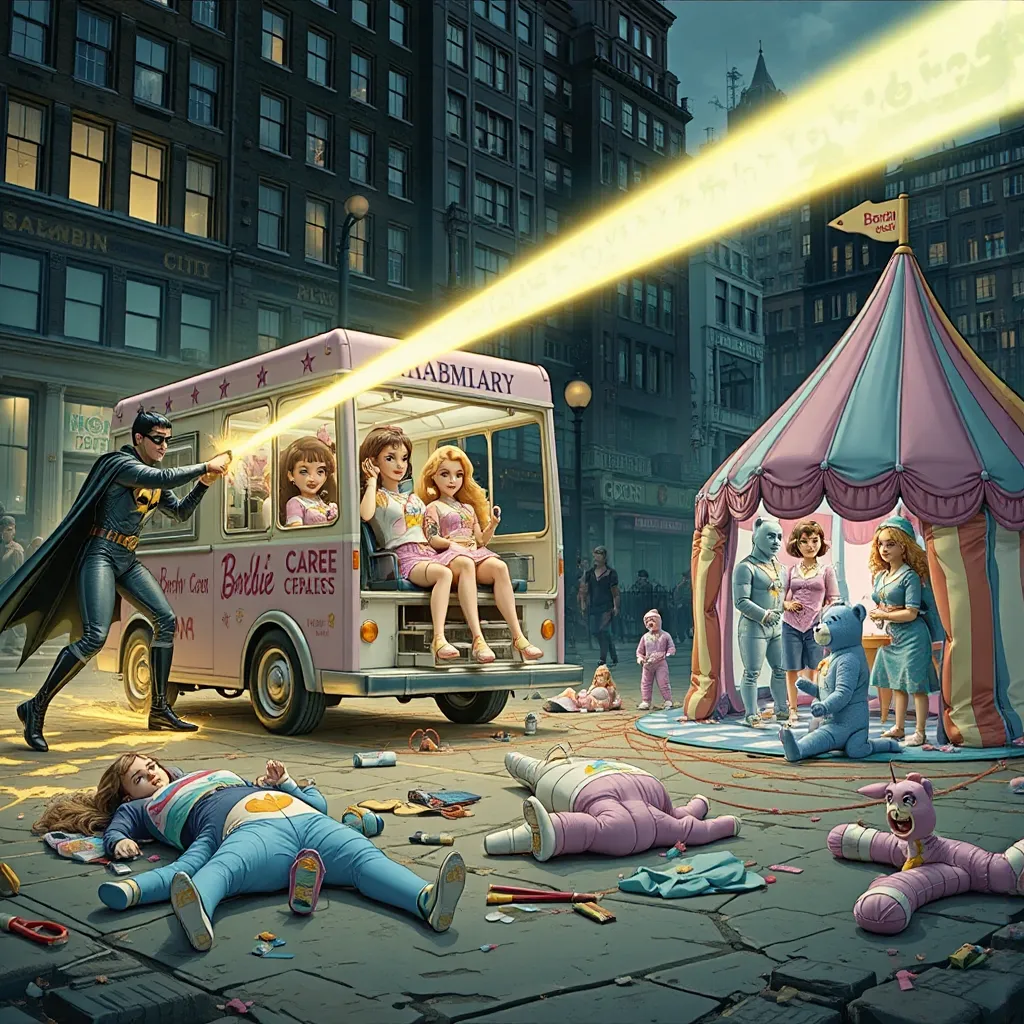
Without waiting for a response, Batman activated a concealed compartment in the Batmobile. A high-powered Bat-laser, usually reserved for cutting through reinforced steel, emerged with a low hum. He aimed it with deadly precision at the oversized Blue plush, who was currently stuffing a sack full of cash into a comically oversized doggy bag.

“Sorry, Blue,” Batman growled, his finger tightening on the trigger. “This game is over.” A concentrated beam of energy shot out, vaporizing the bewildered Blue’s Clues plush in a flash of blue light. The remaining money scattered across the street as the now-deflated doggy bag landed with a pathetic thud.

“Don’t worry, Batman, I’ve got this!” Robin called out, launching a grappling hook to swing into action against the remaining animated toys.

Batman, however, had already disappeared into the depths of the First National Bank, determined to stop Riddler’s plan before it was too late.
Inside, Batman soon locates The Riddler with a GI Joe henchman

The air inside the First National Bank was thick with dust and the smell of explosives. Batman, his cape billowing behind him, navigated the labyrinthine corridors with practiced ease, his senses on high alert. He moved silently, a shadow in the dim light, following the faint tremors that vibrated through the floor.

He finally reached the source: a makeshift tunnel leading down into the earth. The sound of drilling and muffled voices echoed from below. With a silent drop, Batman descended into the darkness.

He landed in a damp, cramped space, illuminated by flickering lanterns. At the far end of the tunnel, The Riddler, clad in his signature green suit and bowler hat, oversaw the operation. Beside him stood a hulking figure, a GI Joe action figure brought to life, its plastic face frozen in a perpetual grimace, wielding a jackhammer with surprising force. Several other henchmen scurried around, loading crates with artifacts from the Depository.

“Well, well, well,” The Riddler chuckled, turning to face Batman. “If it isn’t the Dark Knight, crashing my little party. I must say, you’re a bit late to the game, old friend. But don’t worry, I’ve saved you a riddle!”
Batman soon uses the laser to destroy GI Joe, Batman then makes charge to The Riddler

“Spare me the riddles, Nygma,” Batman growled, his gaze fixed on the villain. “This ends now.” He raised the Bat-laser, its hum growing louder, and aimed it directly at the animated GI Joe. “You’re playing with forces you don’t understand.”

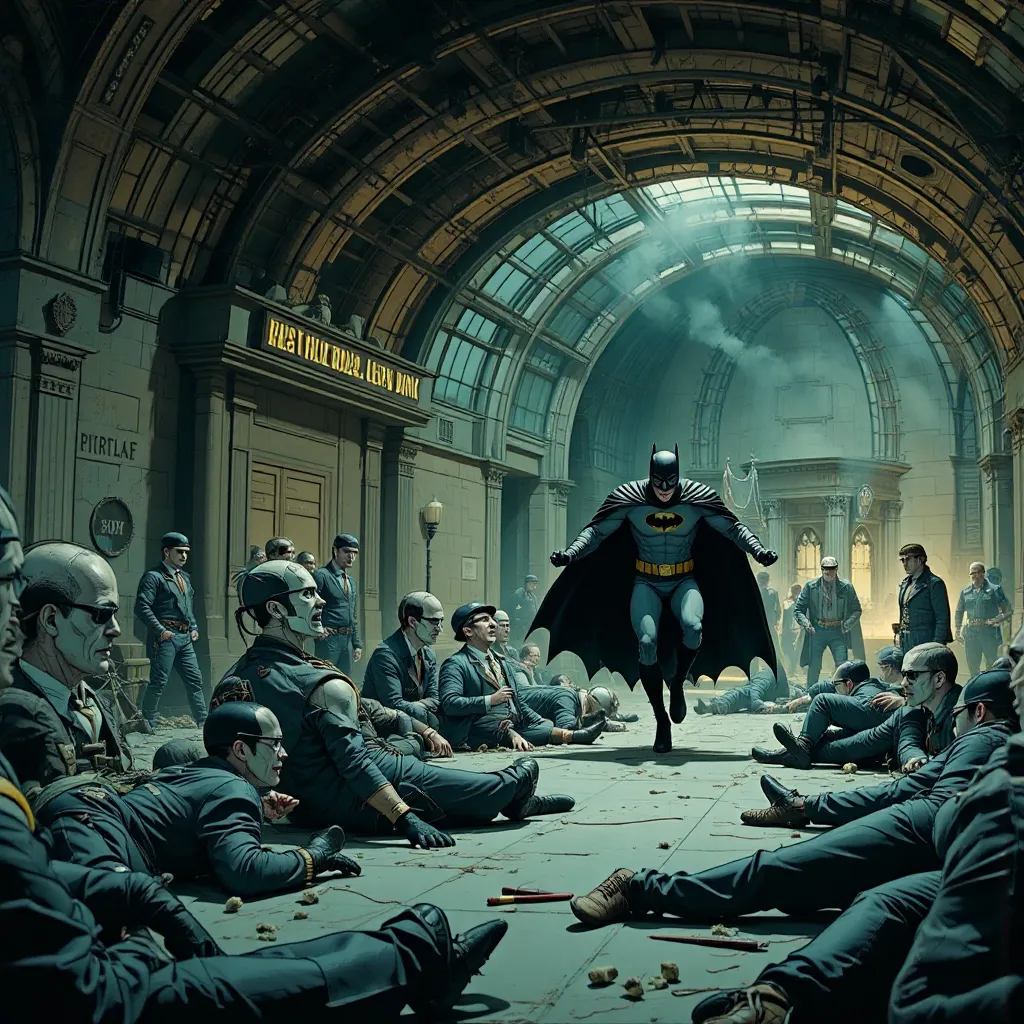
With a swift movement, Batman fired. The laser beam sliced through the air, striking the GI Joe henchman. The plastic figure, caught in the concentrated energy, began to melt and disintegrate, its rigid features contorting into a grotesque caricature before collapsing into a pile of smoking plastic. The other henchmen scattered in terror.

“No matter,” The Riddler said with a sneer, adjusting his bowler hat. “I always knew you’d be a party pooper, Batman.” He signaled to his remaining henchmen. “Get him!”

The henchmen surged forward, but Batman was too quick. He launched a Batarang, disabling the lights, plunging the tunnel into near darkness. He then moved with blinding speed, disarming the henchmen with well-placed strikes, leaving them groaning on the ground.

With the henchmen neutralized, Batman turned his full attention to The Riddler. He charged, his cape swirling around him, a force of nature unleashed.

Robin meanwhile uses the laser to take down Barbie, then Dora, then the Care Bears

While Batman battled The Riddler in the depths of the bank, Robin was facing his own bizarre challenges above ground. The remaining animated toys were proving to be surprisingly resilient, their plastic bodies capable of withstanding considerable punishment.

First, he focused on the Barbies, who were attempting to make a getaway in a commandeered ice cream truck. He lured them into an alleyway with the promise of a “discount sale” on designer handbags, then used the Bat-laser (carefully calibrated to avoid collateral damage) to melt their plastic feet, immobilizing them.

Next, he tracked down Dora the Explorer, who was attempting to set fire to a used car dealership. With a well-aimed Batarang, he disarmed her of her Molotov cocktails (now fashioned from energy drink cans) and then, with a quick blast from the Bat-laser, rendered her inanimate once more.

Finally, he confronted the Care Bears, who were wreaking havoc in a nearby park, terrorizing picnicking families. He managed to lure them into a giant bouncy castle, then used the Bat-laser to deflate the castle, trapping them inside a pile of colorful vinyl.

With the animated toys neutralized, Robin contacted Commissioner Gordon, informing him that the streets of Gotham were, once again, safe for Easter.

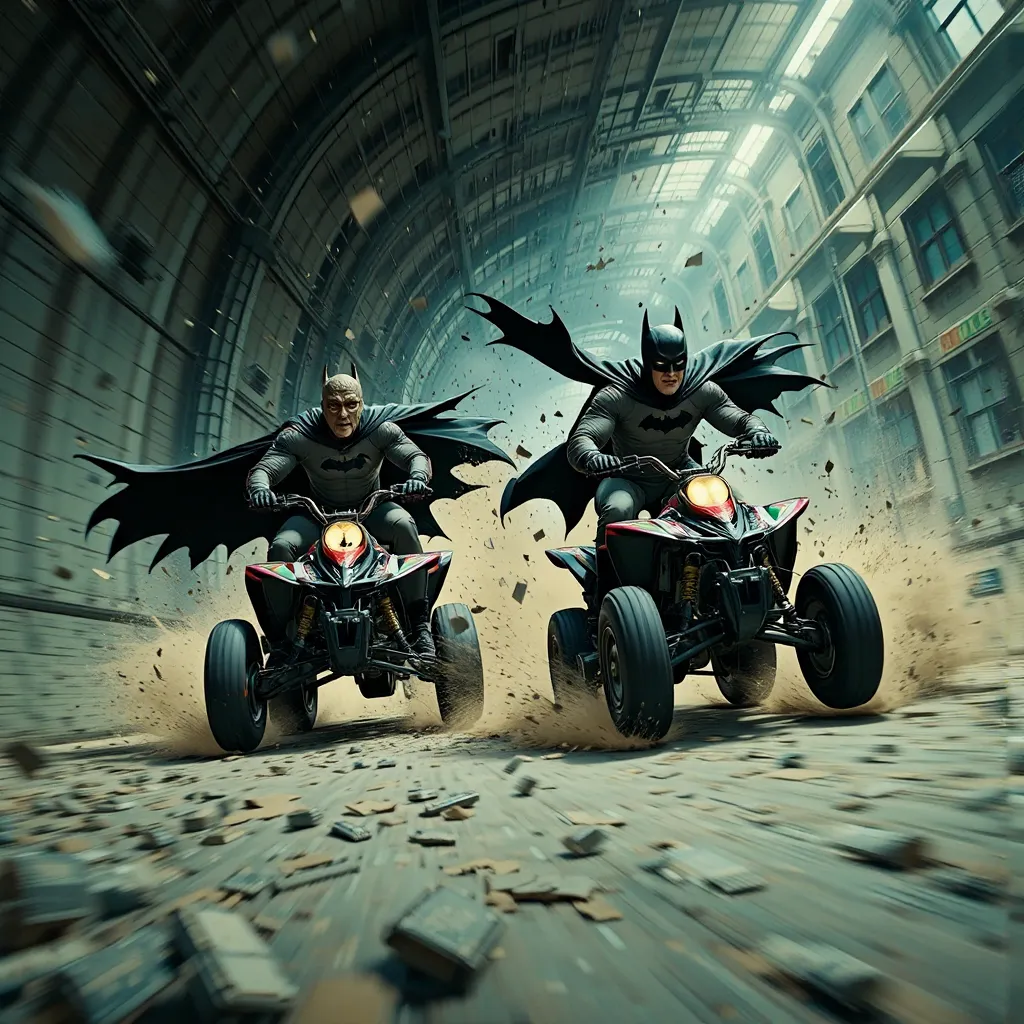
Batman fights the Riddler, Riddler then uses a ATV to escape, Batman follows in another ATV

The two titans of Gotham clashed in the cramped tunnel, a ballet of brutality and brains. Batman, a whirlwind of controlled fury, rained blows upon The Riddler, who dodged and weaved with surprising agility, relying on his intellect and cunning to evade the Dark Knight’s attacks.

“You can’t stop progress, Batman!” The Riddler shouted, his voice echoing through the tunnel. “Gotham needs a little chaos, a little… enigma to keep things interesting!”Suddenly, The Riddler darted towards a hidden alcove and hopped onto a waiting ATV, a high-powered all-terrain vehicle perfect for navigating the narrow tunnels. He revved the engine, the roar deafening, and sped off into the darkness.

Batman, undeterred, quickly located another ATV, identical to the Riddler’s, stashed nearby. He leaped onto the vehicle, ignited the engine, and roared after his quarry, the chase now extending into the subterranean depths beneath Gotham.

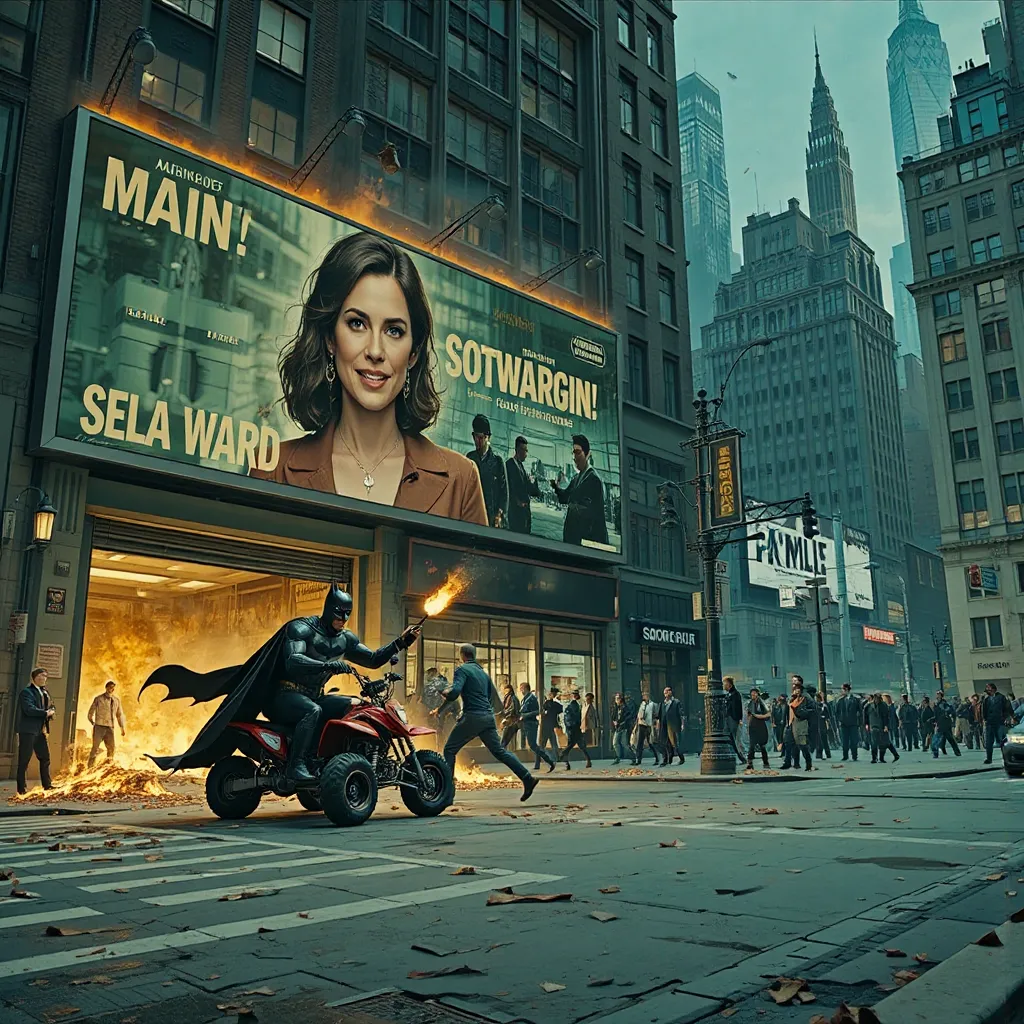
The Riddler soon emarges from the underground, he throws flame bottles at a billboard for Coca Cola that had Sela Ward on it

The ATV chase was a blur of speed and adrenaline. The tunnels twisted and turned, a claustrophobic maze beneath the city’s foundations. Batman, his senses honed to a razor’s edge, expertly navigated the treacherous terrain, keeping The Riddler just within striking distance.

Suddenly, The Riddler swerved sharply, taking a previously unseen exit ramp. The ATV burst out of the ground and onto the streets of Gotham, narrowly avoiding a collision with a passing taxi. The Riddler, now above ground, sped towards the heart of the city.

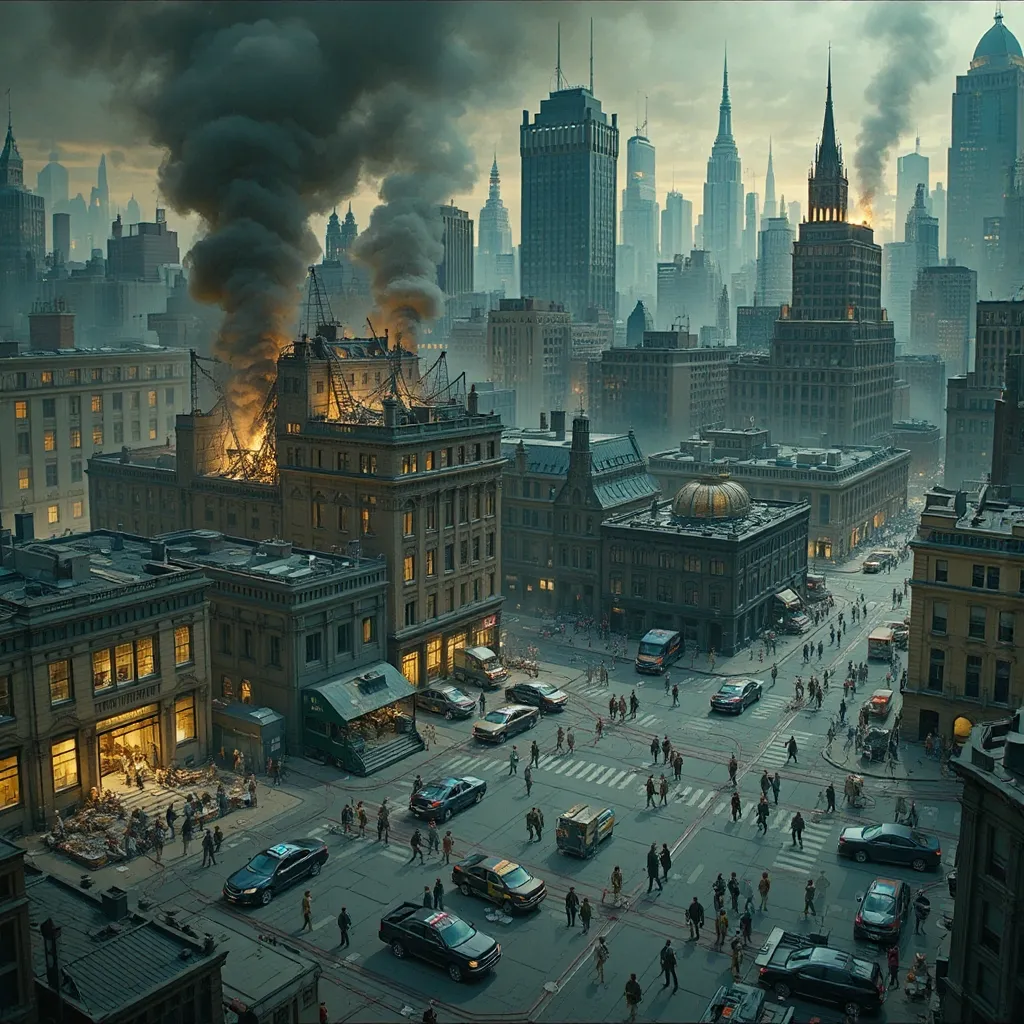
As he raced down Main Street, The Riddler reached into his satchel and pulled out a handful of Molotov cocktails. He hurled them with expert precision at a massive billboard advertising Coca-Cola. The billboard, featuring the smiling face of actress Sela Ward, erupted in flames, the iconic logo quickly obscured by a raging inferno.

“A little chaos, a little anarchy!” The Riddler cackled, speeding away into the crowded streets. Batman, hot on his heels, emerged from the underground exit, his expression grim. This wasn’t just about robbery or puzzles anymore; this was personal.

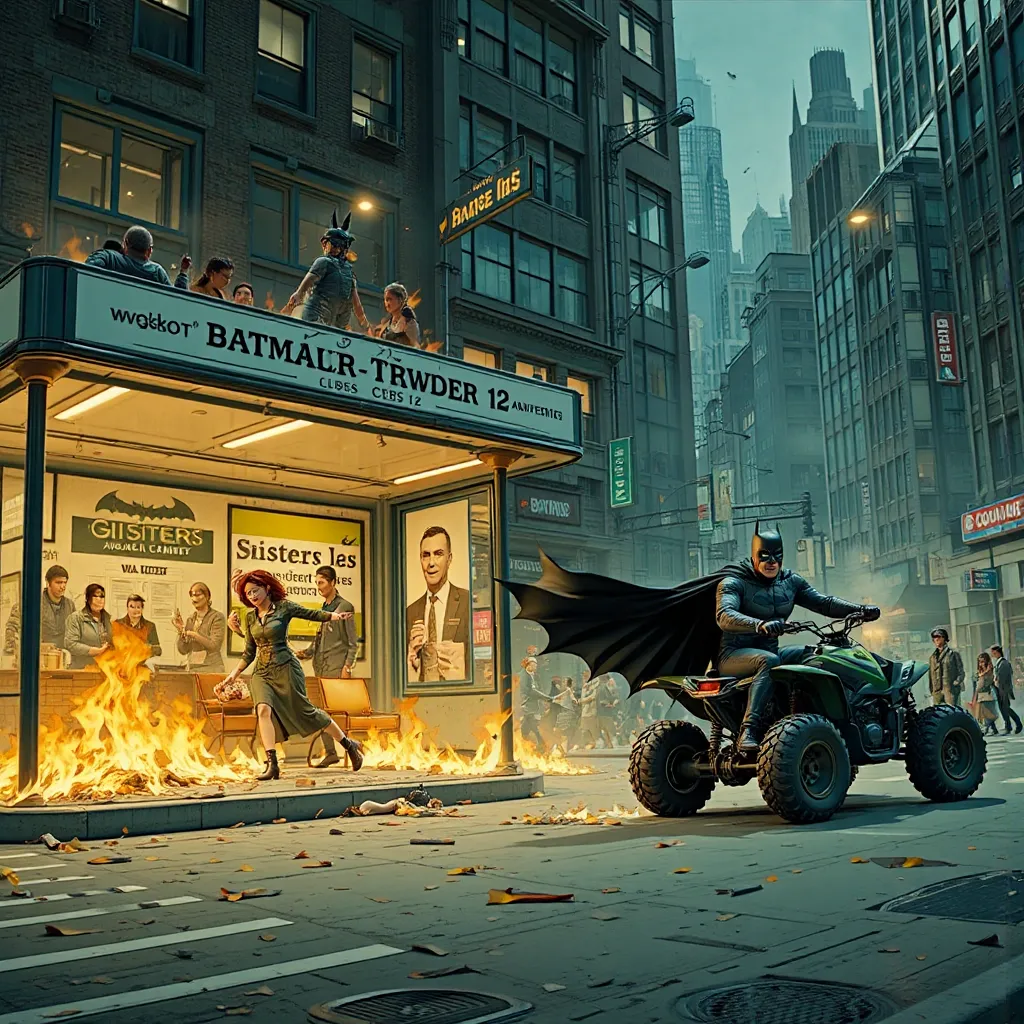
The Riddler then throws a flame bottle at Batman but it misses him hitting a Gotham Transit Shelter with a ad that says Sisters on WGOT CBS 12 weekdays at 3 PM with Swoosie Kurtz, Patricia Kalember, Julianne Phillips and Sela Ward’s faces on the ad, the shelter burns down

The Riddler, seeing Batman in close pursuit, swerved erratically through the crowded streets, weaving between cars and pedestrians with reckless abandon. He reached into his satchel again, pulling out another Molotov cocktail. This time, he aimed it directly at the Batmobile.

He hurled the flaming bottle with all his might, but Batman, anticipating the attack, swerved sharply, narrowly avoiding the projectile. The Molotov cocktail sailed past the Batmobile and crashed into a nearby Gotham Transit Shelter.

The shelter, made of glass and metal, was instantly engulfed in flames. The heat was intense, the glass shattering and melting. The fire quickly consumed the advertisement plastered on the side of the shelter. The ad featured the faces of actresses Swoosie Kurtz, Patricia Kalember, Julianne Phillips, and Sela Ward, promoting the show “Sisters” on WGOT CBS 12, weekdays at 3 PM. Now, their smiling faces were obscured by flames, the shelter reduced to a burning husk.

“Oops! My bad!” The Riddler called out, his laughter echoing through the streets as he continued his escape. Batman’s jaw tightened. This was no longer just about stopping a robbery; this was about stopping a madman from destroying the city he had sworn to protect.

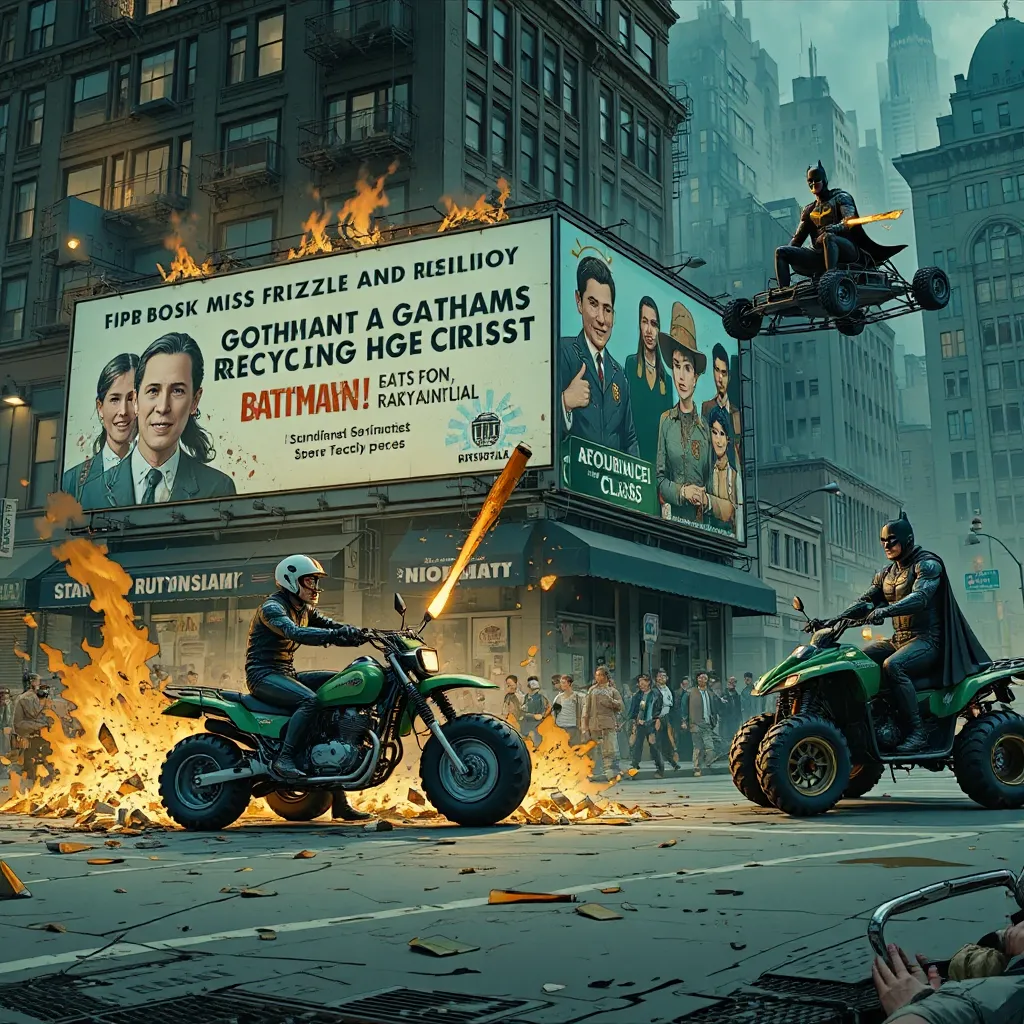
The Riddler then throws another bottle at Batman but it misses hitting a billboard for Gotham’s Recycling Plant with Miss Frizzle and her class’s faces on the ad, the ad burns to a crisp, The Riddler because he was not watching where he was going collided with a Yamaha Motorcycle

The Riddler, fueled by manic energy, reached for another Molotov cocktail. This time, he aimed with more precision, but Batman was ready. He swerved the ATV violently, narrowly avoiding the flaming projectile. The Molotov sailed past him and struck a billboard for Gotham’s Recycling Plant.

The billboard, featuring Miss Frizzle and her class from “The Magic School Bus,” promoting the importance of recycling, instantly burst into flames. The children’s smiling faces, meant to inspire environmental responsibility, were quickly consumed by the inferno, the billboard reduced to a charred mess.

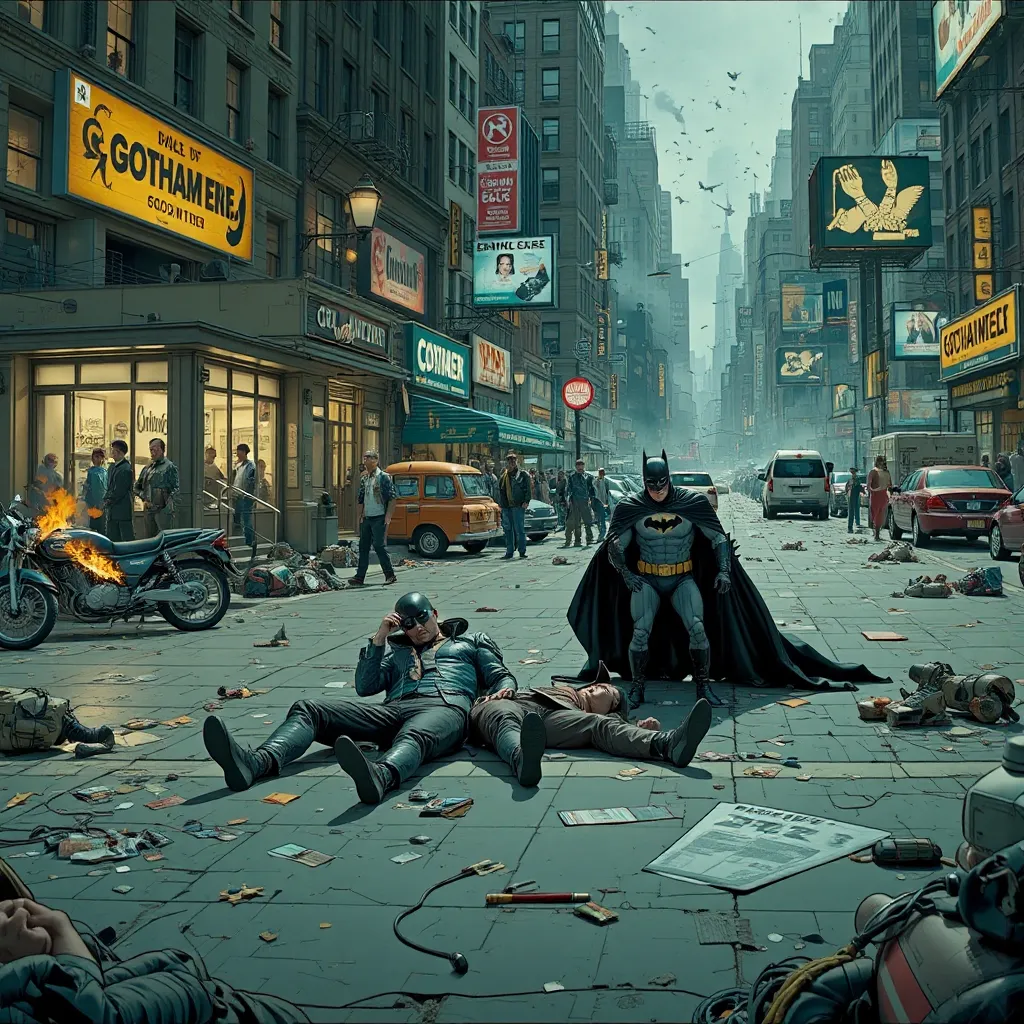
The Riddler, however, had been so focused on targeting Batman that he failed to notice the traffic ahead. With a sickening crunch, his ATV collided head-on with a Yamaha motorcycle, sending him flying through the air. The ATV flipped end-over-end, landing in a mangled heap of metal and plastic. The motorcycle, its front end completely destroyed, lay smoking on the asphalt. The Riddler landed hard on the pavement, his signature green suit torn and covered in grime.

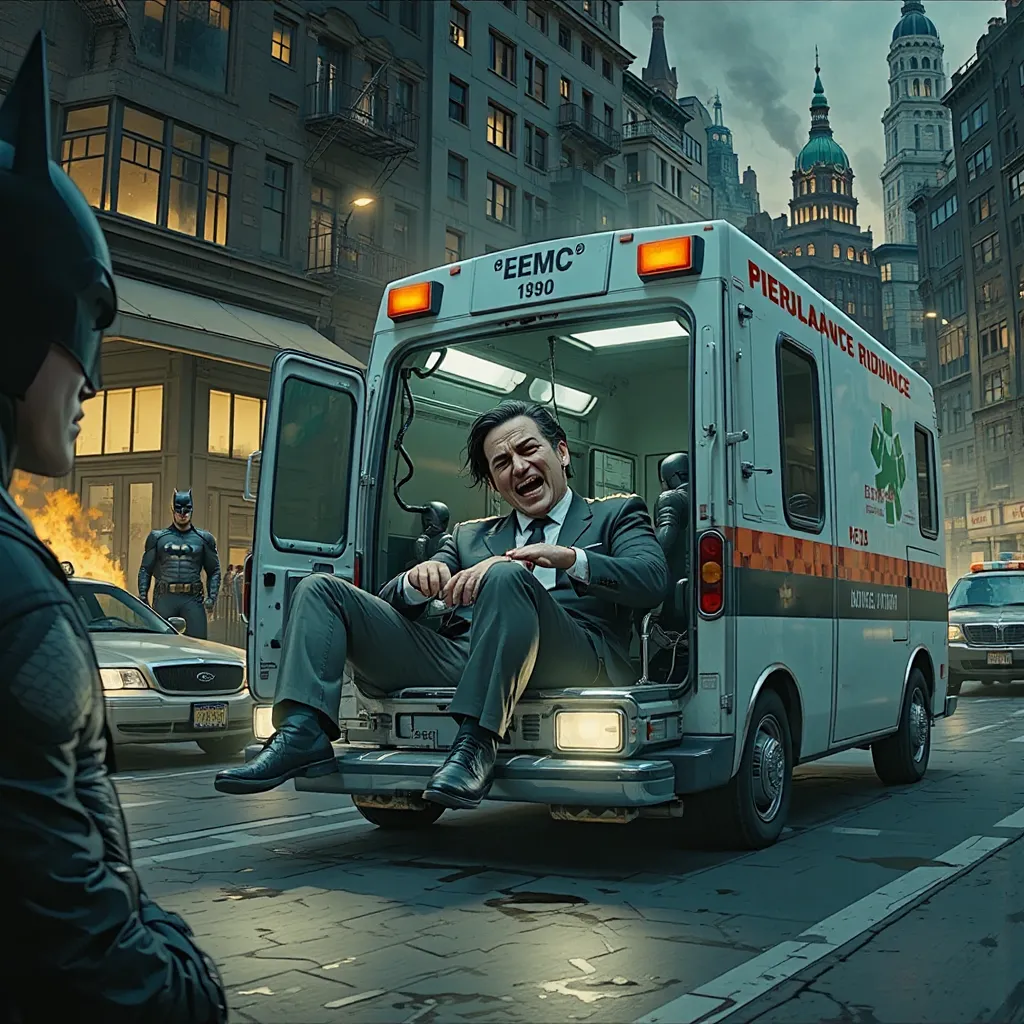
The Riddler suffered severe injuries, Batman soon signaled for Gotham EMS

The Riddler lay sprawled on the street, groaning in pain. His green suit was ripped, his bowler hat askew, and a trickle of blood ran down his forehead. The chaos he had unleashed was finally over, brought to a screeching halt by his own recklessness.

Batman dismounted his ATV and approached the fallen villain, his expression unreadable. He surveyed the scene: the mangled vehicles, the burning billboards, the scattered debris. The city was a mess, but the immediate threat was neutralized.

Without a word, Batman activated his comms and contacted Gotham EMS. “This is Batman. I need paramedics at the intersection of Main and Elm. One suspect down, multiple injuries. Code 3.”

He then turned his attention back to The Riddler, who was struggling to sit up. “It’s over, Nygma,” Batman said, his voice a low rumble. “Your game is finished.” He waited patiently for the paramedics to arrive, a silent guardian watching over the fallen villain. The Easter chaos had come to an end, but the cleanup was just beginning.

Gotham EMS took him to the Gotham Medical Center where he went to surgery

As the sirens wailed in the distance, growing louder, Batman watched as the paramedics carefully loaded The Riddler onto a stretcher. His injuries were severe, a testament to the recklessness of his actions. The paramedics worked quickly and efficiently, stabilizing him before rushing him into the back of the ambulance.

With a final glance at the scene, Batman turned and disappeared into the shadows, leaving the cleanup to the authorities. He knew that The Riddler would face justice for his crimes, but the scars of his chaos would linger on Gotham for some time. The animated toys were deactivated, the fires extinguished, but the memory of the Easter chaos would remain.

The ambulance sped away, its siren a mournful cry in the night, carrying The Riddler to Gotham Medical Center. There, he would undergo emergency surgery, his life hanging in the balance. Whether he survived or not, Gotham had once again been tested, and once again, it had endured. But the question remained: what new threat would emerge from the shadows next?

No one was severally injured in his attacks but damage cost $1,000,000 in repairs

The aftermath of The Riddler’s rampage left Gotham reeling. While no one had suffered life-threatening injuries, the damage to property was staggering. The burning billboards, the destroyed transit shelter, the looted stores, the damaged vehicles – it all added up to a hefty price tag. Initial estimates placed the cost of repairs at a staggering $1,000,000.

The city would recover, of course. Gotham always did. But the incident served as a stark reminder of the constant threat that loomed over the city, the ever-present danger posed by its colorful rogues’ gallery. The Easter chaos, though bizarre and outlandish, was a stark illustration of the darkness that lurked beneath the surface of Gotham’s glittering facade.

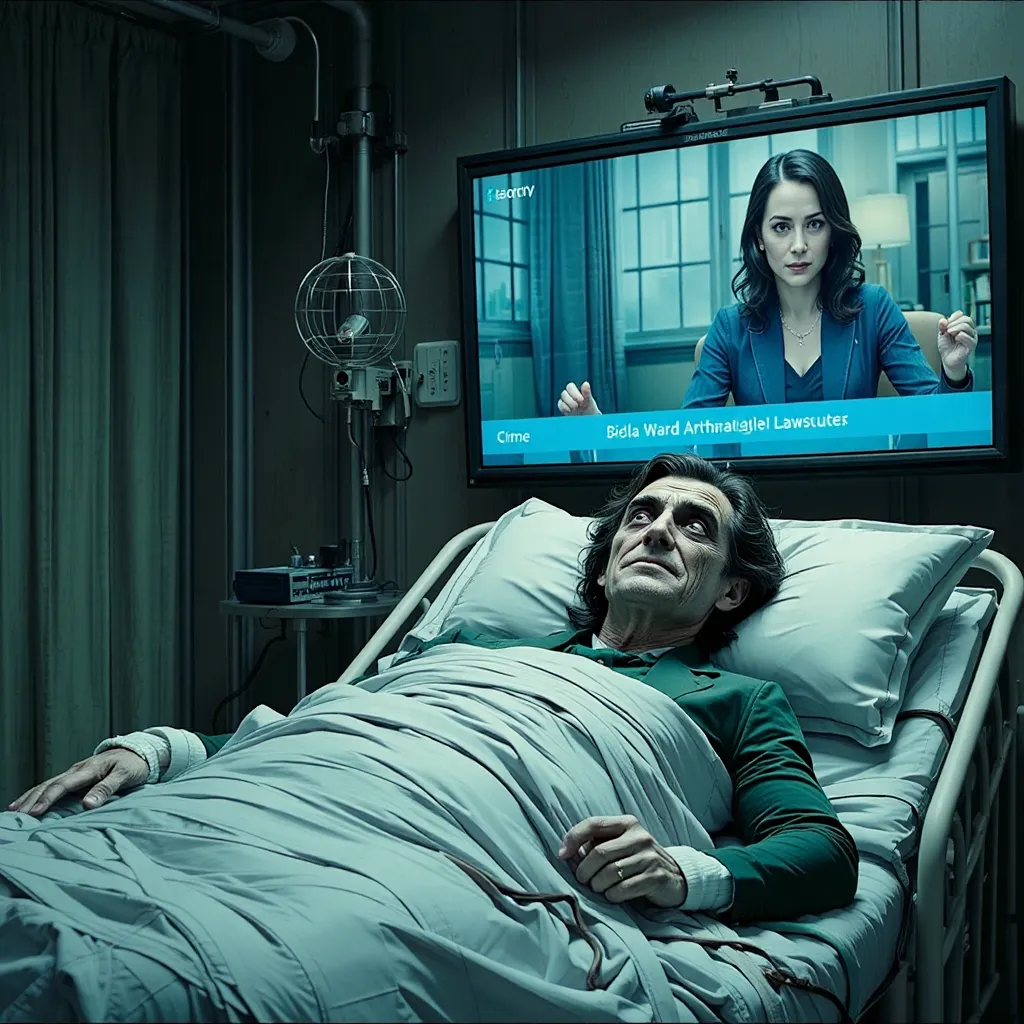
The Riddler suffered a severe head injury and was in the prison ward for 2 months before being taken to the mental hospital, he would be sued by Sela Ward for destroying her Coke ad

Two months passed. The dust settled, the damage was repaired, and Gotham slowly returned to its usual state of uneasy normalcy. The Riddler, however, was not so fortunate. He spent those two months in the prison ward of Gotham Medical Center, recovering from a severe head injury sustained during the motorcycle collision.

His mind, already teetering on the edge of sanity, had been further fractured by the trauma. After extensive evaluations, doctors determined that he was no longer fit to stand trial. He was transferred to Arkham Asylum, where he would receive long-term psychiatric care.

But The Riddler’s troubles didn’t end there. The destruction he had caused had consequences. Actress Sela Ward, outraged by the defacement of her Coca-Cola ad, filed a lawsuit against him, seeking damages for the destruction of her likeness and the tarnishing of her image. The lawsuit promised to be a long and complicated affair, adding to the Riddler’s already considerable woes.

Publish my app play store

Publish my app play store

AIT jingle

Create a 5–10 second audio fresh, modern, reassuring intro jingle with natural sounds like flowing water and wind for a sustainability-themed podcast titled ‘Green Voices.

Atirbot Chat – Chatbot Creation Plan

crie um chatbot ia com o nome: Atirbot Chat, um chat composto de interação com respostas para as perguntas solicitadas

Atirbot Chat: Seu Assistente Inteligente Interativo

Olá! Sou o Atirbot Chat, seu assistente virtual criado para responder às suas perguntas, ajudar com informações e manter conversas interessantes. Estou aqui para te auxiliar da melhor forma possível.

Como posso te ajudar hoje?

Para me usar, basta digitar sua pergunta ou solicitação na caixa de texto. Posso ajudar com:

  • Informações gerais: Pergunte sobre fatos históricos, definições, informações sobre lugares, pessoas, eventos, etc.
  • Resumo de textos: Forneça um texto e eu posso te ajudar a resumir os pontos principais.
  • Tradução: Precisa traduzir um texto? Eu posso te ajudar com isso.
  • Brainstorming: Precisa de ideias para um projeto? Vamos explorar algumas opções juntos!
  • Redação: Posso te ajudar a escrever e-mails, cartas, posts para redes sociais e muito mais.
  • Dicas e conselhos: Precisa de uma perspectiva diferente sobre um problema? Compartilhe sua situação e eu farei o meu melhor para te dar um conselho útil.
  • Curiosidades: Quer saber algo interessante? Pergunte!

Exemplos de perguntas que você pode me fazer:

  • “Qual a capital da França?”
  • “Resuma a história da Revolução Francesa.”
  • “Traduza ‘Hello, world!’ para português.”
  • “Quais são as vantagens da energia solar?”
  • “Como posso melhorar minhas habilidades de comunicação?”
  • “Conte-me uma curiosidade sobre os golfinhos.”

Observações:

  • Eu estou em constante aprendizado e minhas respostas podem não ser perfeitas.
  • Se você tiver alguma dúvida sobre a precisão das minhas respostas, é sempre bom verificar as informações em fontes confiáveis.
  • Estou aqui para te ajudar, mas não posso fornecer aconselhamento profissional em áreas como medicina, direito ou finanças.

Então, o que você gostaria de saber? Vamos começar!

Article about Sergey Korolev

Article about Sergey Korolev

Sergey Korolev: The Chief Architect of the Soviet Space Program

Sergey Pavlovich Korolev (1907–1966) was a pioneering Soviet rocket engineer and spacecraft designer, widely regarded as the father of practical astronautics and the chief architect behind the Soviet Union’s early space program. His visionary leadership and technical expertise were instrumental in launching humanity’s first artificial satellite and the first human into space.

Early Life and Education

Sergey Korolev was born on January 12, 1907, in Zhytomyr, then part of the Russian Empire (now Ukraine). His interest in aeronautics and rocketry began early; inspired by visionary scientists like Konstantin Tsiolkovsky, Korolev joined the Moscow Bauman Higher Technical School where he specialized in aeronautical engineering.

Career Beginnings

In the 1930s, Korolev worked on developing rocket-powered gliders and participated in early Soviet rocket research. However, like many intellectuals of his time, he faced significant political repression. In 1938, during Stalin’s Great Purge, Korolev was arrested and sentenced to a gulag labor camp, accused of anti-Soviet activities. He survived these harsh years and was later released and rehabilitated during World War II, after which he resumed his work on rocketry.

Leading the Soviet Space Effort

After World War II, Korolev was named chief designer of the Soviet rocket program, effectively leading the country’s efforts in rocketry and space exploration during the Cold War space race against the United States. He spearheaded the development of the R-7 rocket, an intercontinental ballistic missile that also served as the launcher for the world’s first artificial satellite, Sputnik 1, on October 4, 1957. This event shocked the world and marked the beginning of the space age.

Korolev continued to lead key Soviet space missions, including the launch of:

  • Sputnik 2 (1957): Carrying Laika, the first living creature to orbit Earth.
  • Vostok 1 (1961): The first human spaceflight mission, carrying Yuri Gagarin into orbit, making him the first human in space.
  • Subsequent Vostok and Voskhod missions: Advancing human spaceflight capabilities.

Legacy and Impact

Korolev’s contributions laid the foundation for Soviet space exploration throughout the 1960s and beyond. He was known for his remarkable ability to combine bold vision with meticulous engineering pragmatism. Despite working under intense secrecy and political pressures, his achievements helped establish the Soviet Union as a leading space power.

Tragically, Korolev died on January 14, 1966, from complications following surgery. His identity had been kept a state secret during his lifetime, and only after his death was the full extent of his role publicly acknowledged.

Conclusion

Sergey Korolev remains one of the most influential figures in the history of rocketry and space exploration. His work not only advanced Soviet aerospace technology but also inspired generations of engineers and scientists worldwide. Thanks to his pioneering efforts, humanity took its first steps beyond Earth, forever changing our understanding of our place in the cosmos.

Sign In / Up